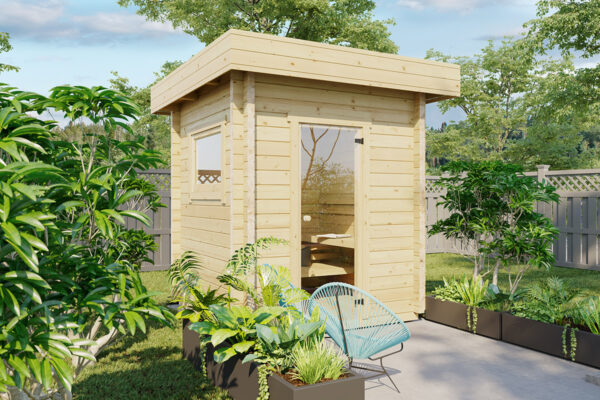
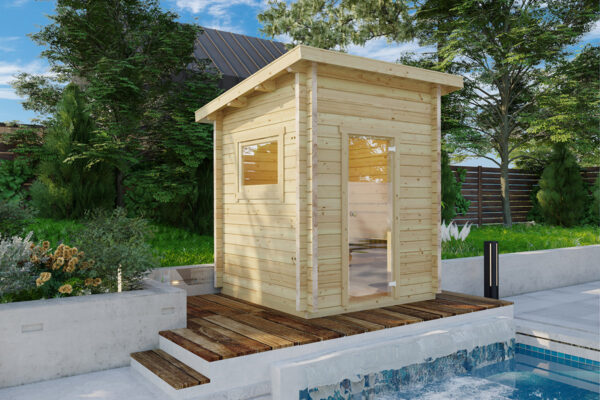
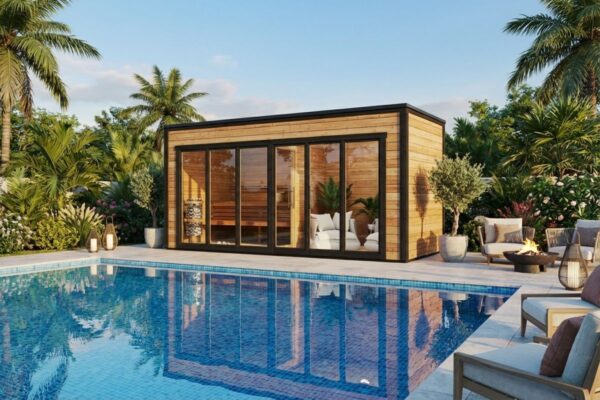
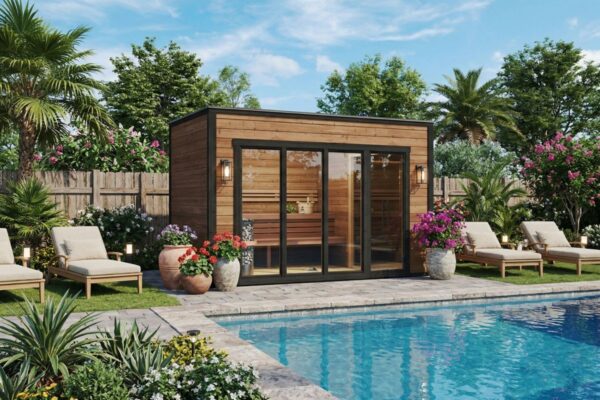
An outdoor sauna is a freestanding timber cabin designed for a garden, patio, or terrace, housing a dedicated hot room powered by an electric or wood-burning heater. Essentially a self-contained Finnish sauna, it eliminates the need for messy indoor renovations and can be erected on any firm, level base. Cabin sizes typically range from 4 to 26 m², with solid wall profiles from 44 to 70 mm. Depending on the footprint, layouts can expand beyond the hot room to include changing areas, shower rooms, relaxation lounges, or even guest sleeping quarters.
Key takeaways before you begin:
Renowned for their restorative and health-boosting properties, saunas are an integral part of everyday life in Finland. In 2020, UNESCO formally recognised Finnish sauna culture by adding it to the Representative List of the Intangible Cultural Heritage of Humanity. The Finnish Heritage Agency estimates there are roughly 3.2 million saunas across a country of just 5.7 million residents. While outdoor saunas are often viewed elsewhere in Europe as an ultra-luxury addition, modern pre-cut timber kits make them far more accessible and straightforward to install than most people expect.
Step outside into your own garden sauna, and you have an immediate personal retreat to unwind, recharge, and clear your mind at the end of a long day.
Ranging from compact 4 m² outbuildings to generous 26 m² garden chalets, an outdoor sauna is purpose-built to deliver a proper heat session. Standard interior fittings generally include:
Wall profiles run from 44 mm to 70 mm, with 70 mm solid timber being the gold standard. Thicker interlocking logs heat up faster, hold their temperature far longer, and significantly cut down on energy consumption. Larger floor plans can easily accommodate an anteroom for changing, a walk-in shower, a comfortable lounge, or additional guest bedrooms.
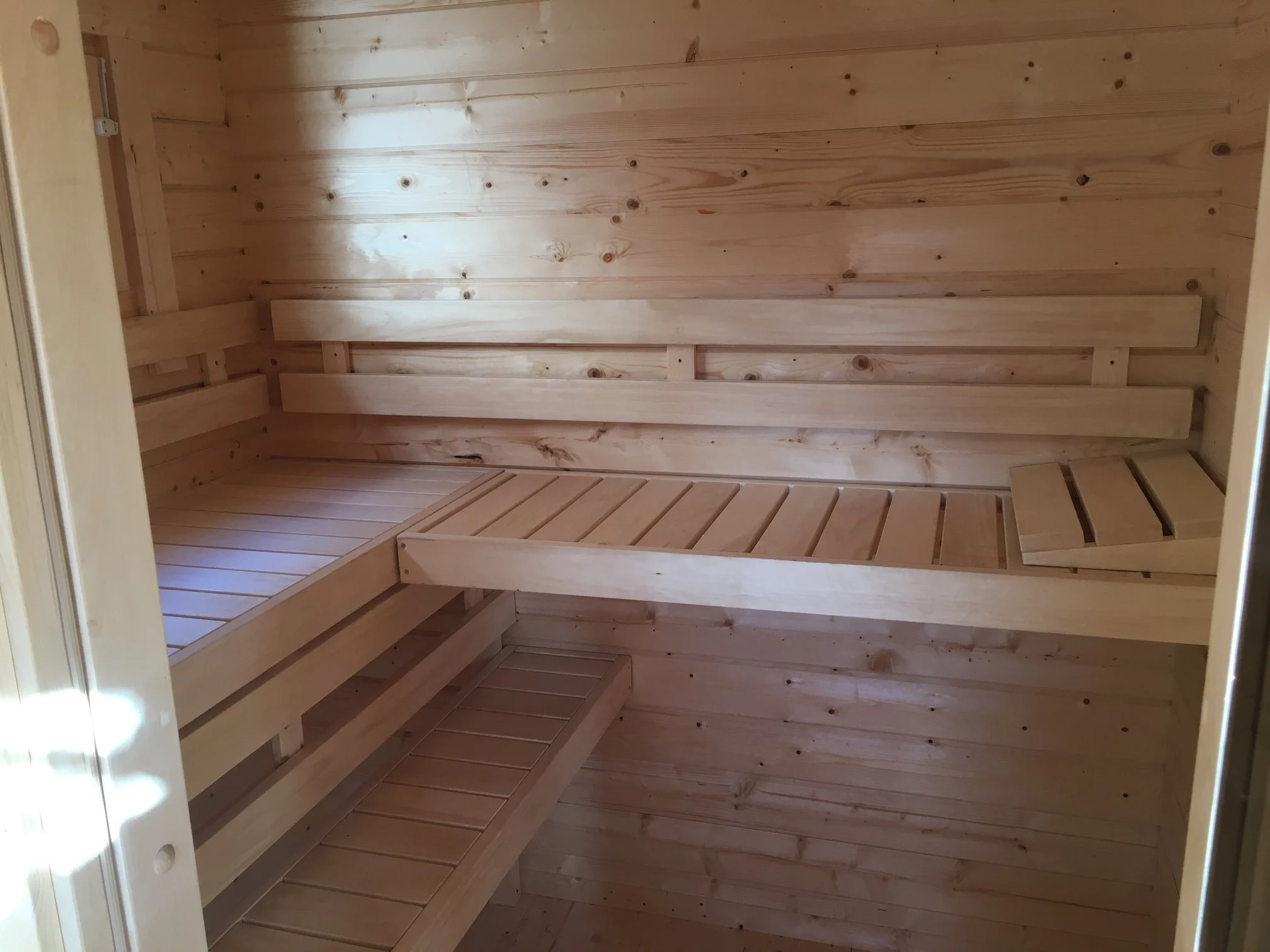
A compact 2 × 2 m cabin fits into virtually any garden corner while offering a full sauna experience for 3–4 adults. We can help you confirm the right fit for your plot before you decide.
From a manufacturer with over 20 years of experience and a 5-year warranty.
Because the word “sauna” is frequently applied to distinct wellness setups, it helps to understand how these heat therapies compare:
| Type | Temperature | Humidity | Heating Method |
|---|---|---|---|
| Finnish sauna (outdoor) | 80–100 °C | 10–20% (clinical trials); 20–40% (Finnish Sauna Society) | Stove heats surrounding air and a bed of igneous stones |
| Infrared sauna | 43–57 °C | Low ambient humidity | Infrared heating panels warm the body directly |
| Steam room (hammam / Turkish bath) | 40–50 °C | Approaching 100% | Dedicated steam generator pumps out dense, humid vapor |
Data compiled from clinical reviews and the Cleveland Clinic (see Sources).
The garden buildings highlighted here are authentic Finnish saunas: you tailor the humidity inside by ladling fresh water over glowing rocks to produce bursts of steam (löyly). The Finnish Sauna Society notes that this remains the only traditional bathing method where you directly control temperature and humidity at the same time.
We supply a diverse lineup of precision-milled outdoor saunas. Below is an overview of our most popular garden models (prices correct as of November 2026, excluding heater):
| Model | External Footprint | Layout & Highlights | Price |
|---|---|---|---|
| Small Outdoor Sauna / Simply Sauna 2 | 2.3 × 2.3 m | Dedicated sauna room for 3–4 bathers | €7,400 |
| Lisette Sauna Cabin | 2.3 × 3.9 m | Integrated changing area and sauna room | €9,090 |
| Hansa Lounge XXL | 8 × 5 m | Sauna room, changing room, living lounge, and veranda | €19,510 |
| Karina Garden Sauna | 5.9 × 5 m | Sauna, shower room, dressing room, lounge, and sleeping loft | €24,590 |
The Simply Sauna 2 (2 × 2 m) is an ultra-efficient footprint available in three distinct roof profiles. Despite its small external size, its 2 × 2 m interior comfortably seats up to four adults.
The Lisette sauna cabin measures 2 × 4 m with thick 70 mm walls. The layout divides the space into a hot room and a private changing area—ideal for catching your breath, drying off, and having a cool drink between rounds.
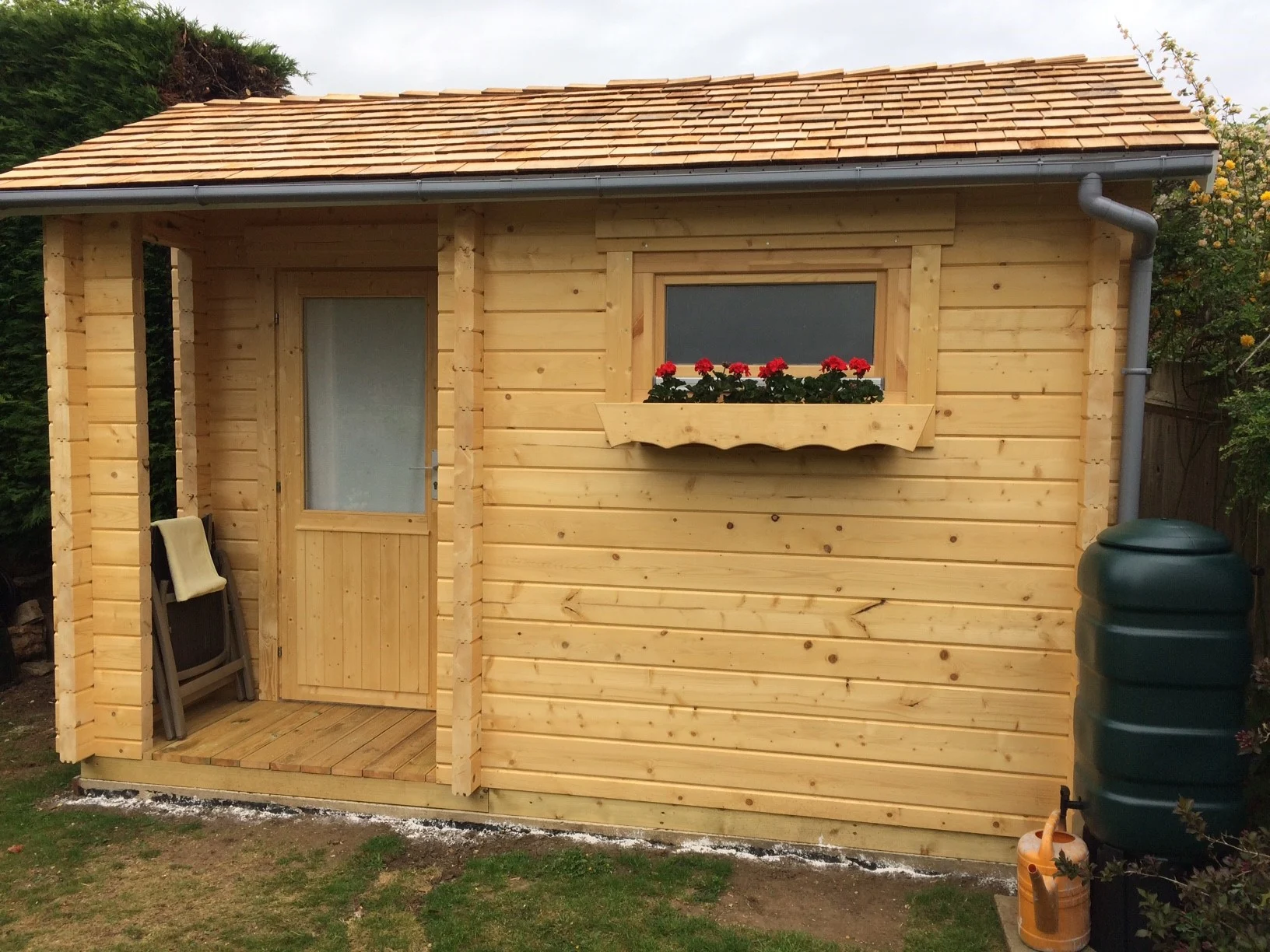
The Hansa Lounge XXL outdoor sauna pairs a 2 × 2 m hot room and changing area with an expansive 15 m² relaxation lounge. Outside, an integrated 16 m² covered veranda provides a weather-protected spot to cool down in the open air year-round.
The Karina garden sauna cabin represents the ultimate multi-room garden lodge. With its hot room, shower room, dressing area, 10 m² lounge, and 9 m² mezzanine loft, it functions seamlessly as both a home spa and a fully equipped guest annex.
If you prefer rounded Scandinavian silhouettes, barrel saunas—such as our 2.4 × 2.4 m barrel model (€6,870, accommodating up to four bathers)—provide a distinctive focal point along with natural, curved air circulation.
Every great sauna revolves around its heater. Whether you choose clean electric elements or an authentic wood-burning firebox, the unit’s core job is heating a basket of heavy volcanic rocks. Spooning water over these stones unleashes waves of steam (löyly), producing that signature envelopment of radiant heat and instant warmth.
Standard building kits do not include a heater. Instead, you choose the heater as an optional add-on so it can be delivered alongside your cabin and matched to your exact interior dimensions. Note that all electric sauna heaters require a dedicated, high-amperage circuit installed by a certified electrician.
Sauna heaters are rated by room volume (m³), never floor area alone. Leading Finnish manufacturer Harvia outlines the standard sizing calculation for electric models:
Example: A 2 × 2 m hot room with a 2.1 m ceiling has an unadjusted volume of 8.4 m³. Adding a 1 m² full-glass door adds 1.2 m³, bringing the figure to 9.6 m³. A 9 kW heater, such as the Harvia Spirit SP90E (rated for 8 to 14 m³), handles this volume comfortably. Always cross-check the manufacturer’s official specifications before making a purchase.
Wood-burning units require a compliant, fire-rated twin-wall flue kit and carry their own volume ratings (for example, the Harvia 22 covers 8 to 22 m³). Remember that kilowatt ratings for wood stoves are derived differently and cannot be directly compared to electric outputs.
Adequate airflow is critical for clean breathing and even heating. With an electric heater, air inside the room should cycle roughly six times per hour. Where mechanical ventilation is fitted, the fresh air inlet belongs high on the wall above the rocks. In a naturally drafted wood-burning setup, the fresh air vent sits low near the base of the stove, with the exhaust outlet located high on the opposing wall near the ceiling.
Once your session ends, let the heater run for an extra 10 minutes with the door propped open to dry out the benches and timber walls. For residential use, keeping the cabin clean only requires wiping down the woodwork with warm water and a mild, wood-safe detergent once to three times a year.
Your outdoor sauna can easily adapt to different bathing styles. In Finland, bathers traditionally heat the room to 70–90 °C according to Visit Finland, with the Finnish Sauna Society favouring 80–100 °C, using regular water splashes to generate bracing steam bursts. By contrast, the Central European tradition leans toward milder temperatures of 50–60 °C, where you can lounge undisturbed for up to 30 minutes without adding humidity. For deeper insights, consult our guides on Finnish sauna temperature and how to take a Finnish sauna step by step.
A standard round typically lasts between 5 and 20 minutes, followed by a dedicated cooling break. If you are just starting out, ease into the routine: begin with shorter intervals at lower temperatures, stay attuned to your body, and step outside immediately if you feel lightheaded or overheated.
Because sauna bathing prompts profuse sweating, always shower first and hydrate thoroughly before, during, and after each session. Avoid alcohol entirely around sauna use. Per Visit Finland guidance, saunas are suitable for nearly everyone, barring infants and individuals with acute medical issues like open wounds or unstable cardiac conditions. If you have an underlying health issue, consult your physician first. Anyone with cardiovascular concerns or high blood pressure should avoid plunging straight into freezing water immediately after leaving the hot room.
When enjoyed responsibly, regular sauna sessions provide deep relaxation and measurable wellness benefits. To explore the science, read our detailed review on the proven health benefits of saunas.
Planning rules depend on your specific municipality and region. In Spain, for instance, Article 5 of the Building Management Act (Ley de Ordenación de la Edificación) defers licensing to local and regional planning codes:
Because planning limits—such as permitted floor areas, maximum ridge heights, and boundary setbacks—vary from town to town, verify your local requirements before ordering. For more on navigating the rules, explore our guide to timber building regulations and our step-by-step article on how to build a garden sauna.
Keep these key factors in mind when choosing your cabin:
For a full breakdown covering installation, foundation work, and day-to-day running costs, take a look at our comprehensive guide on the cost of installing a home sauna.
In short: an outdoor sauna gives you a standalone timber garden spa featuring a dedicated hot room, an appropriately sized heater, and a custom setup tailored to your outdoor space.
Thermowood offers exceptional durability, structural stability, and a refined contemporary look with large glass frontages. All our garden buildings include free delivery and a 5-year warranty.
Rated 5 stars on Trustpilot by thousands of happy customers across Europe.
No, heaters are not included in the standard building kit. You can purchase an electric or wood-burning heater and stones as an optional extra, sized specifically for your hot room. Electric heaters must be connected by a certified electrician.
A typical session lasts between 5 and 20 minutes, followed by a cooling-off break. Beginners should start with shorter sessions at lower temperatures and step out immediately if feeling dizzy or uncomfortable.
This depends entirely on your regional autonomous community and local council bylaws. Some areas require a minor works permit, while others only require a prior notification (declaración responsable). Always check with your local planning department before placing an order.