Getting the temperature right in a Finnish sauna is essential for an experience that feels truly restorative, comfortable, and therapeutic. In Nordic tradition, sauna bathing is never treated as an endurance test against blistering heat. Rather, it is an intentional ritual of bodily balance—a mindful interplay of heat, humidity, and refreshing cool-downs.
Finding your ideal temperature lets you tailor every session to your body’s needs, whether you are stepping onto the benches for the first time or are a seasoned bather. Balanced heat distribution and a properly insulated cabin guarantee an inviting, energy-efficient, and safe retreat.
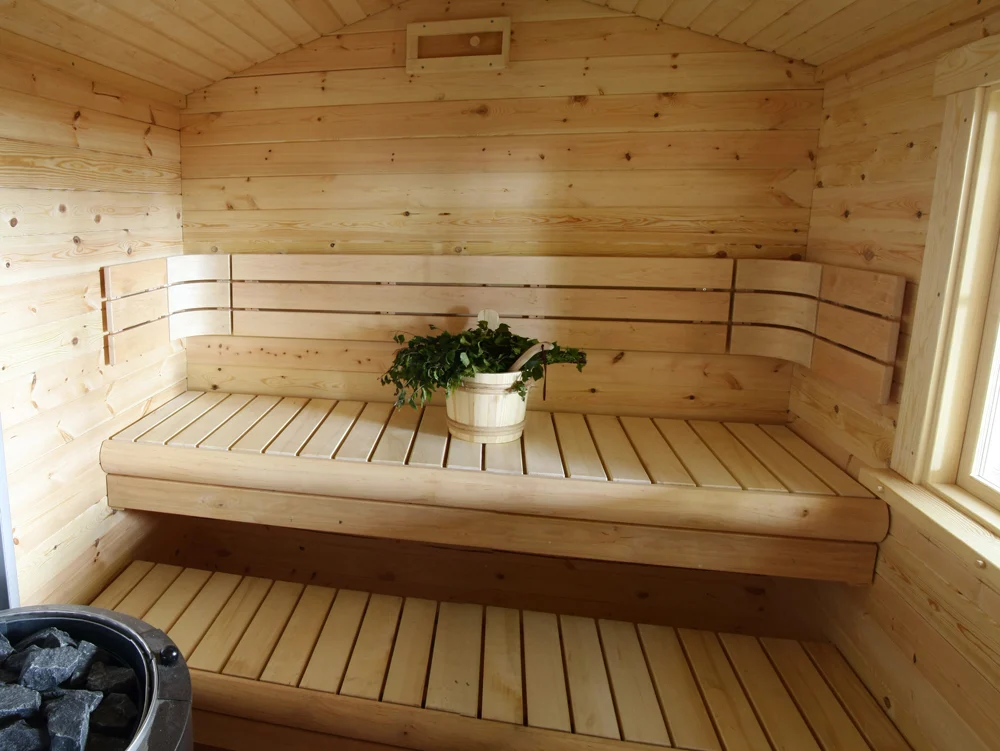
A traditional Finnish sauna typically runs between 70 °C and 100 °C (158 °F to 212 °F). The Finnish Sauna Society recommends a sweet spot of 80 °C to 100 °C, measured at head height while seated on the upper bench.
Unlike high-humidity steam rooms, a Finnish sauna is built around dry heat. Baseline relative humidity inside the cabin remains low—usually hovering between 10% and 20%, and rarely topping 30% before water is ladled over the hot stones.
This combination of intense, dry heat produces several distinct physiological benefits:
To explore how dry heat works on the body in greater depth, explore our guide to Finnish sauna health benefits and discover more about the overall benefits of sauna bathing for everyday vitality.
Experience authentic Nordic wellness with cabins engineered to sustain the ideal temperature without wasting energy. Crafted from premium timber with a 5-year guarantee. Discover our latest Fjord line, featuring models like Aurland, Lyngen, Lyse, Sogne, Nord, and Geira.
Direct from the manufacturer with free delivery across Spain and no middlemen.
Finnish sauna culture avoids rigid rules. The golden rule is simple: tune the environment to your personal comfort and how your body feels that day.
Cabin design also shapes how hot the room feels. Because heat rises naturally, the temperature difference between the lower and upper tiers can be substantial. For advice on bench selection and posture, read our step-by-step guide to using a Finnish sauna.
The wall thermometer tells only part of the story. Perceived heat inside a Finnish sauna is largely dictated by löyly—the wave of rising steam released when fresh water hits the volcanic sauna stones.
Producing clean, uniform steam depends directly on heater quality and rock capacity. To find the right setup, consult our guide to choosing the right sauna heater based on your room volume.
While there is no mandatory timer on a sauna session, clinical studies and traditional practice recommend spending roughly 5 to 20 minutes inside per round.
To keep every session safe and rejuvenating, keep these essential practices in mind:
If you experience dizziness, lightheadedness, nausea, or a racing heartbeat, step out immediately and relax in a cool, well-ventilated space.
While regular dry heat bathing is safe for the vast majority of healthy adults, certain health conditions demand medical clearance or complete avoidance:
Reaching and holding an even temperature depends entirely on the craftsmanship of your sauna cabin. Thin walls or inadequate insulation allow heat to escape rapidly, forcing the heater to work overtime and creating unpleasant drafty zones.
Key construction details that secure thermal efficiency include:
These structural advantages are especially clear in outdoor saunas exposed to changing coastal elements, such as Thermowood installations in warm coastal regions like Marbella. Thermowood provides outstanding dimensional stability against humidity shifts and sun exposure, locking in steady interior heat while cutting energy consumption.
If you are planning a garden build, discover the defining features of an outdoor sauna and review the essential steps to building a garden sauna made to endure all seasons. For contemporary outdoor settings, our Fjord line—including models like Aurland, Lyngen, Lyse, Sogne, Nord, and Geira—delivers top-tier thermal efficiency and architectural style.
Explore compact saunas or complete outdoor layouts featuring changing rooms and porches for cooling off between sessions. We are here to help you select the ideal timber and floor plan for your local climate, including our premium Fjord line (Aurland, Lyngen, Lyse, Sogne, Nord, and Geira).
Over 20 years of craftsmanship building premium wooden garden structures.
Nordic sauna traditions and heater manufacturers generally treat 90 °C to 100 °C (194 °F to 212 °F) as the upper safe boundary. Going past 100 °C accelerates dehydration and can irritate the airways without delivering extra health advantages.
The resulting steam (löyly) sharply raises the cabin’s humidity. This prevents sweat from evaporating rapidly from your skin, creating an immediate sensation of surging heat even though the ambient air temperature on the thermometer remains virtually the same.
Yes. For healthy individuals, a daily 10-to-15-minute session is safe and beneficial. However, if you have cardiovascular conditions or chronic health concerns, always consult your physician first.