Adding a barbecue can completely transform your outdoor living space. However, before picking out a grill or lighting the first coals, one crucial structural detail determines both the longevity of your setup and your safety: the base.
Placing a barbecue directly onto a lawn or bare soil leads to uneven settling, structural cracking from ground movement, and serious fire or tipping hazards. This guide covers how to choose, size, and construct the right foundation for your garden layout and the weight of your cooking equipment.
Topsoil and turf are living, shifting surfaces. They soak up rainwater, shrink during hot, dry spells, and compress readily under sustained loads. Installing outdoor cooking equipment directly on unprepared ground causes immediate issues:
A solid, level, and clean foundation eliminates these hazards at the source, creating a safe, comfortable outdoor cooking space.
Our Nordic BBQ huts feature built-in smoke extraction hoods and fire-resistant granite worktops so you can cook outdoors in any season. Made from solid spruce, they offer complete protection against wind and rain.
Over 20 years crafting with Nordic timber, backed by an official 5-year guarantee.
Every outdoor cooking setup has distinct load-bearing demands. Choosing the right base depends on total weight, soil stability, and whether your cooking area is sheltered.
This is the strongest, most permanent foundation available. It is the mandatory technical choice for masonry barbecues built from firebrick, natural stone, or precast concrete blocks, which routinely weigh between 400 and 600 kg or more.
This approach uses concrete flags, natural stone slabs, or interlocking pavers laid over a compacted sub-base of crushed stone, finished with a sharp sand bedding layer.
These elevated modular frames serve as heavy-duty pedestals engineered from steel or architectural precast concrete.
Wood must never be exposed to direct heat radiation or falling embers. However, timber decking can be used under pergolas, gazebos, or enclosed outdoor rooms as long as an insulating, non-combustible protective barrier is installed beneath the firebox—such as steel plating, polished granite slabs, or refractory concrete pads.
Sizing a base to match the exact footprint of your barbecue is a common mistake. The foundation must also accommodate foot traffic around the grill and provide a safe buffer zone.
To prevent a masonry barbecue from cracking over time, prepare a multi-layered ground profile:
For paving slabs or block pavers supporting portable barbecues, a 10 cm compacted granular base is generally sufficient on well-draining ground. Increase this depth on heavy clay soil or in frost-prone regions.
To ensure you can move comfortably and safely around the grill, factor in these minimum dimensions:
The exact footprint where the barbecue sits must be completely level. Any slope causes cooking oils to pool to one side, leading to flare-ups, uneven cooking, or unstable grates.
However, the paved area surrounding the grill should feature a gentle drainage fall—typically between 1.5% and 2%—directed away from nearby walls to shed rainwater efficiently. If you are dealing with a sloping site before pouring concrete, check out our guide on creating a level base on uneven ground.
Pouring a concrete slab for an outdoor barbecue requires a methodical approach to ensure dependable, long-term load-bearing capacity:
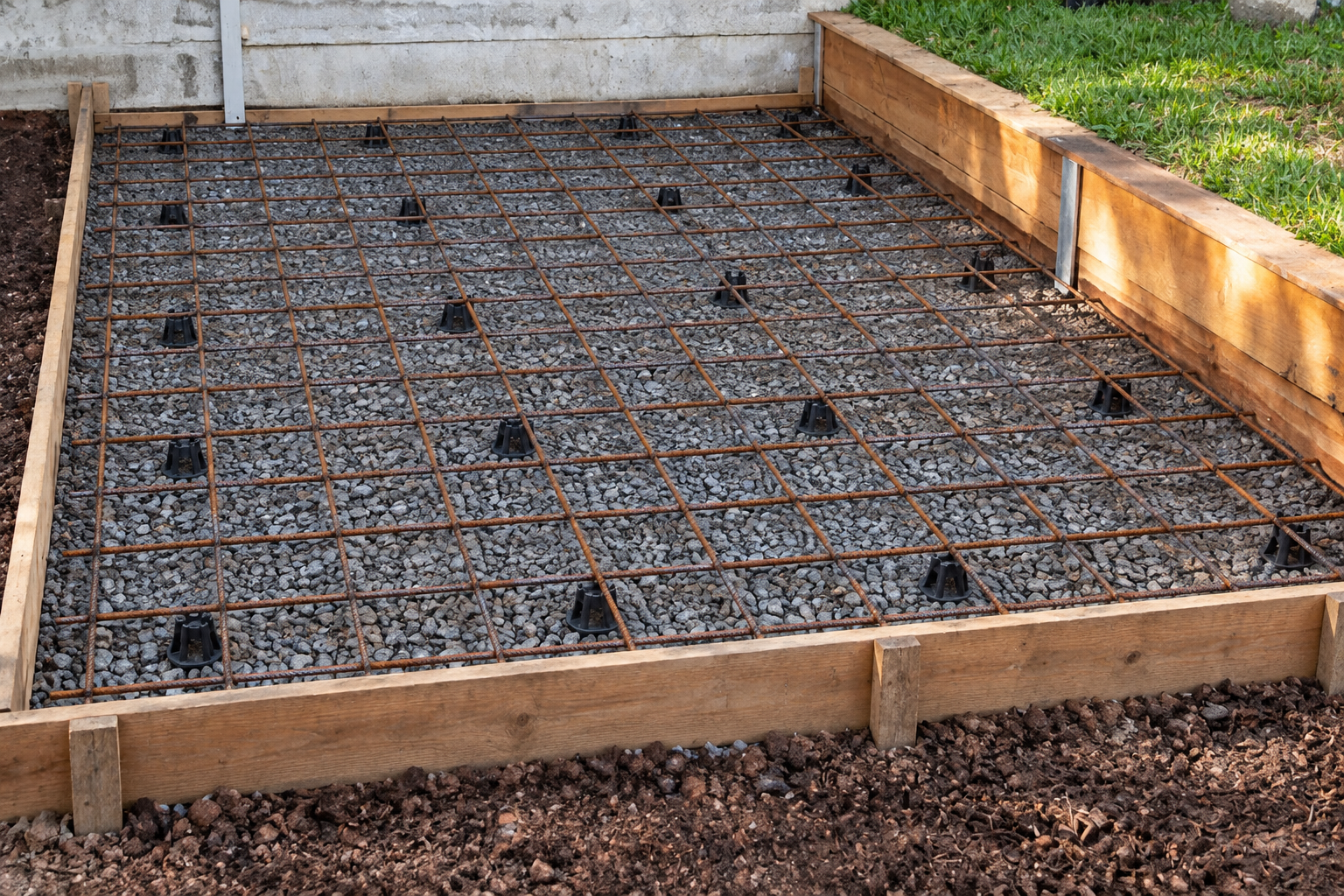
When installing a precast masonry barbecue, manufacturers specifically recommend dry-fitting the base components on the leveled slab rather than bedding the lowest panels in rigid mortar. The temperature difference between cold concrete and a hot firebox generates thermal expansion stresses, which will crack the lower sections if they are rigidly bonded.
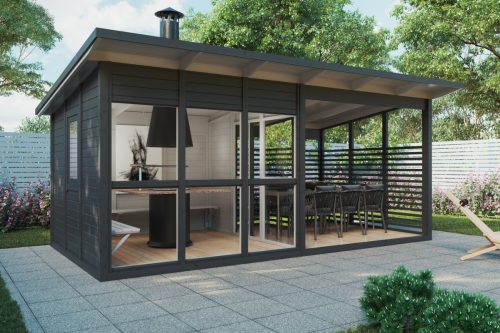
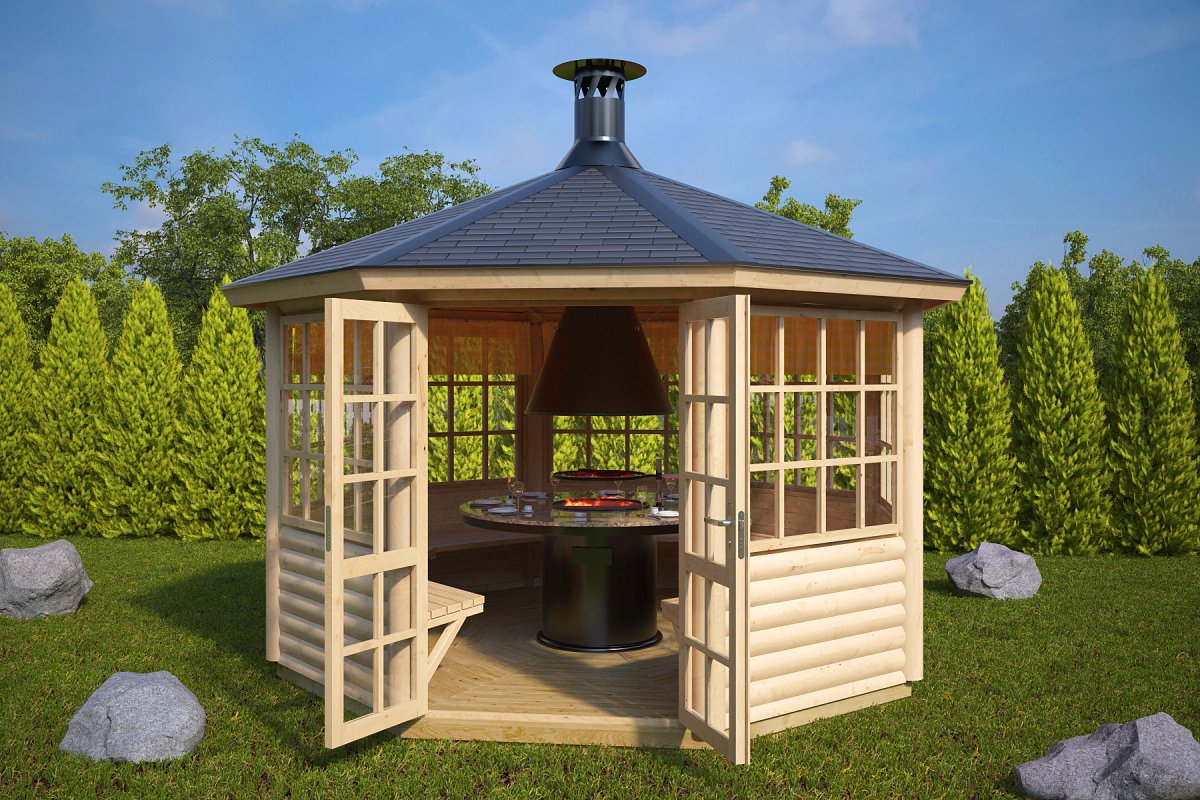
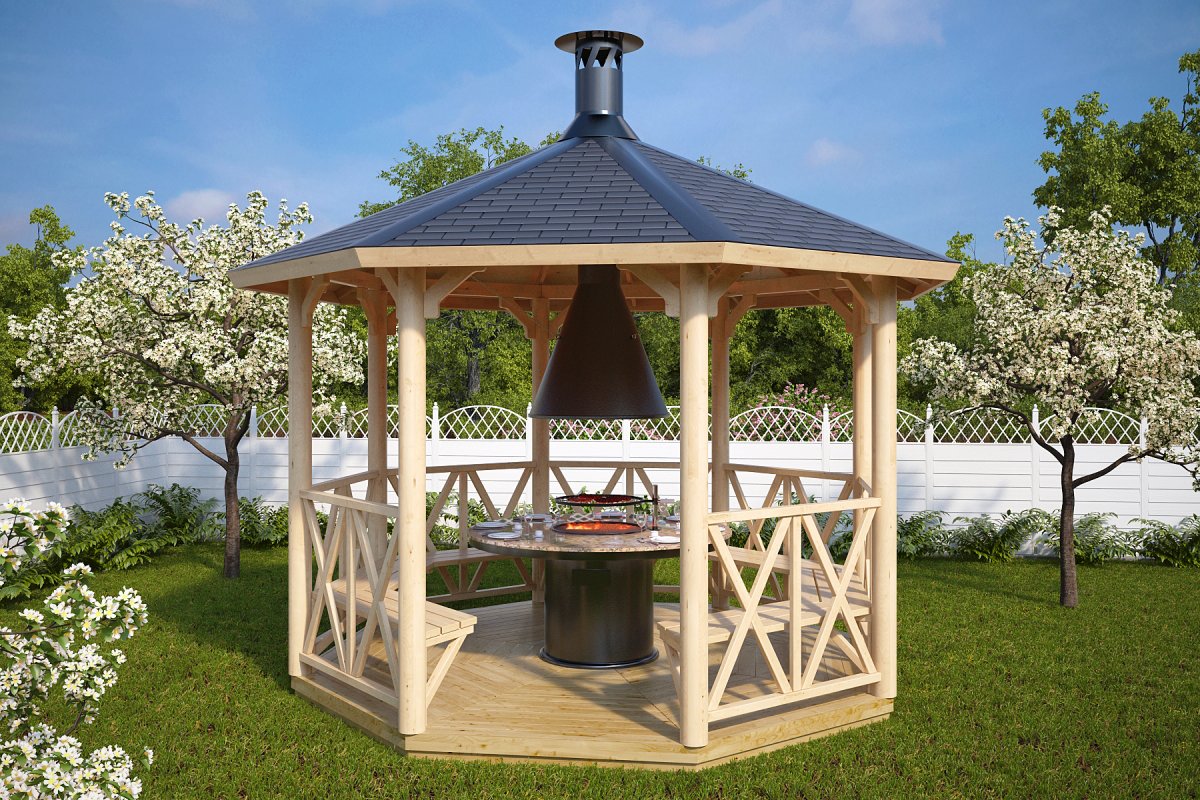
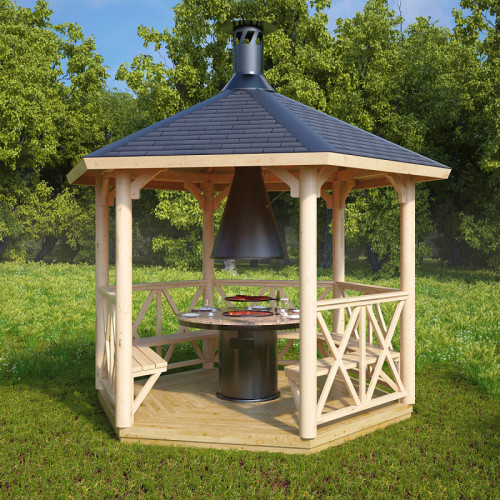
When expanding your setup into a sheltered, year-round cooking space, foundation planning must balance structural support for the cabin with fire safety for the grill. Enclosed Scandinavian BBQ huts featuring central grills and open timber gazebos combine natural timber walls with heat-resistant central areas.
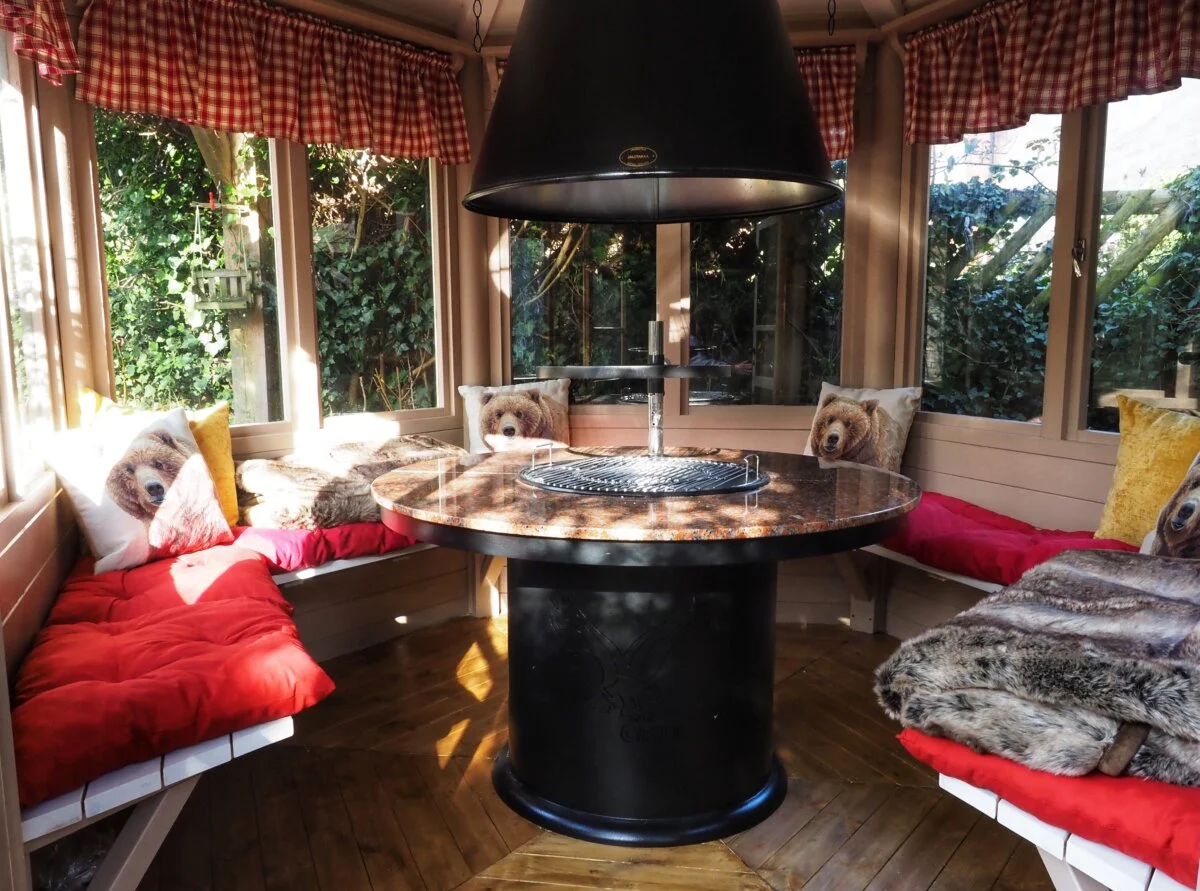
In these structures, perimeter posts or log walls typically sit on strip footings, concrete piers, or a full slab, combined with a timber subframe for garden buildings that elevates and protects the floor from rising damp. In the center, beneath the charcoal firebox and smoke hood, the wooden floor gives way to a non-combustible base finished with heavy-duty granite or protective steel plating.
If you are exploring foundation styles for a sheltered cooking area or garden retreat, explore the most popular types of foundations for log cabins to find the best fit for your terrain.
Our solid timber gazebos pair durable Nordic spruce with quick, precise assembly. Create a protected garden dining area for family gatherings, direct from the manufacturer.
High-precision Nordic craftsmanship with free delivery across the mainland.
Cooking over an open flame requires strict safety margins. When positioning your barbecue on its foundation, always follow the clearances specified by equipment manufacturers and local building regulations:
If your project includes an adjacent storage annex for firewood, charcoal, or gas bottles, consult our technical guide for a shed base to plan the ground prep correctly.
A solid, level, fire-resistant base elevates your entire outdoor cooking experience. Investing the time to prepare a properly compacted sub-base and an unyielding foundation protects your investment and ensures years of safe, stress-free open-air dining.
No, it is not strictly required. Mobile gas and charcoal grills can safely stand on well-laid patio slabs, exterior porcelain tiles, or block pavers laid over a compacted gravel sub-base. A reinforced concrete slab is primarily required for heavy masonry barbecues, natural stone installations, and built-in outdoor kitchens weighing several hundred kilograms.
Although concrete takes around 28 days to reach full design strength, you can safely begin assembling a precast barbecue after 3 to 4 days of curing under normal weather conditions. In warm, dry weather, keep the slab lightly misted during this time to prevent surface cracks caused by rapid water loss.
No, it is not recommended to bond the barbecue’s bottom panels to the slab using rigid mortar or structural adhesives. The refractory components expand significantly as they absorb heat. If they are locked rigidly to a cold concrete base, this thermal movement will generate high stress and crack the lower sections.