You can get a mortgage for a wooden house, provided the law and your lender classify it as real property (bien inmueble). In practice, this means the home must rest on permanent foundations, sit on land zoned for residential use, follow an architect-certified technical project, hold an approved municipal building permit, and be registered with the Land Registry (Registro de la Propiedad). As long as your legal and technical paperwork is in order, the fact that the house is built from timber is not a barrier.
If your project fails to meet any of these criteria, mortgage financing will be off the table, leaving personal loans as your primary alternative. Here is what you must have lined up before approaching a lender:
Lenders do not write mortgages specifically for “wooden houses”—they finance real property. Real estate portal idealista and banking group BBVA explain that for any prefabricated or timber build to qualify as real property, it must be permanently anchored to a foundation, built to plans approved by an official architects’ association (colegio de arquitectos), granted a municipal building permit, and recorded in the Land Registry.
Any structure built on a chassis, fitted with wheels, or erected without permanent foundations is classified under the law as personal property (bien mueble). Banks cannot secure a mortgage against personal property, limiting your financing options to unsecured personal loans.
Under Spanish building codes and banking regulations, there are no legal bans or mandatory valuation penalties for timber construction. That said, underwriting criteria vary by lender. If one bank rejects your mortgage application, it pays to shop around before making drastic changes to your plans.
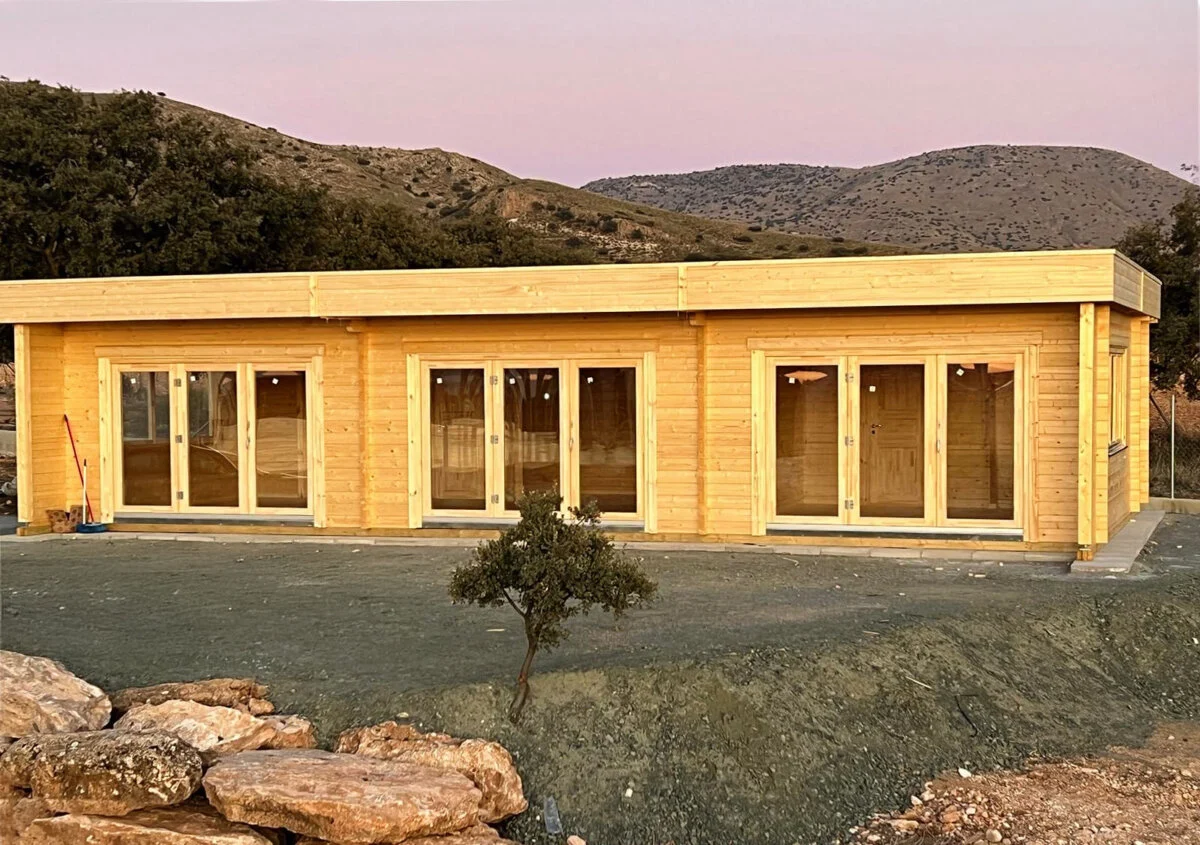
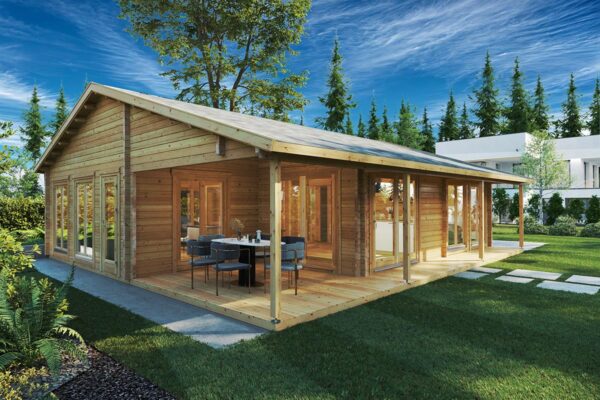
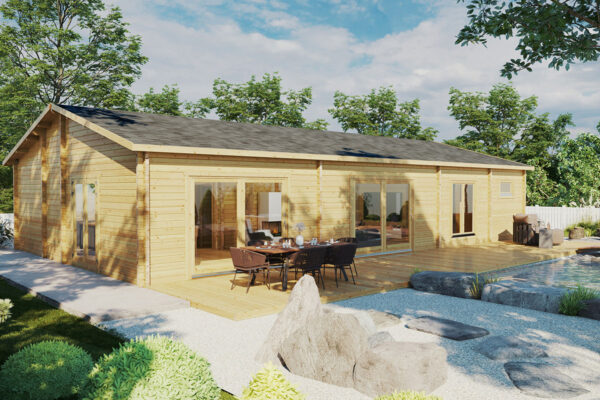
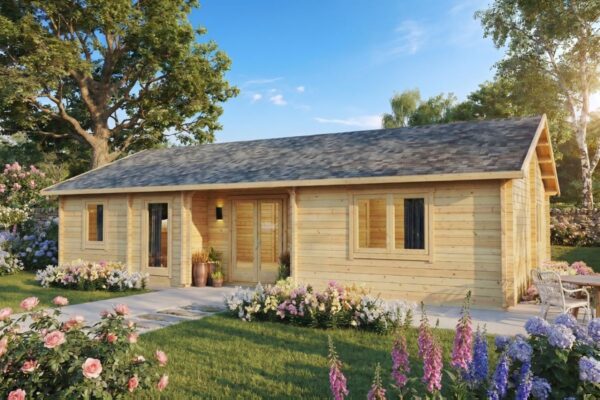
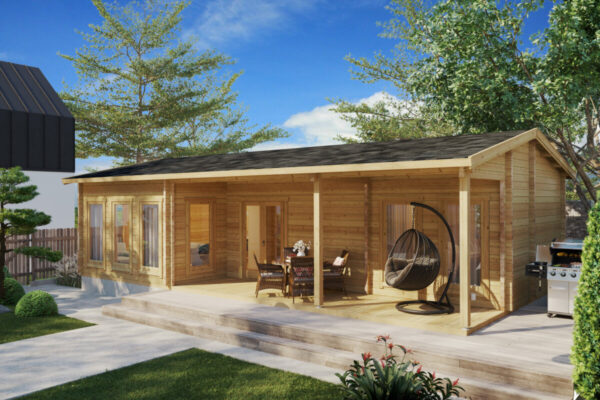
If you are looking for a wooden house suitable for a residential build, start with models designed for year-round living, featuring 70 mm wall thickness and double glazing. Compare sizes and layouts before speaking with your architect and your bank.
Manufacturer with over 20 years of experience and a 5-year warranty.
When you apply to finance a custom build on a plot you own, lenders evaluate several strict criteria:
Regarding the mandatory ten-year structural warranty (seguro decenal): the LOE exempts private individuals building a single-family home for their own personal use. However, if you sell the property within ten years of completion, you must take out this insurance policy for the remainder of that period unless the purchaser explicitly waives it. Some banks may still insist on this coverage as a loan condition, so confirm their policy early.
A self-build mortgage (hipoteca autopromotor) shares many features with a conventional mortgage, but funds are disbursed gradually rather than in one initial lump sum. The Bank of Spain explains that lenders release an initial tranche to get work underway, followed by scheduled drawdowns as your project manager submits formal site progress certificates (certificaciones de obra). A final balance is held back until construction is officially signed off. Mortgage broker iAhorro notes that banks often advance up to 50% across early stages, keeping 10% to 20% in reserve until practical completion, though exact drawdown schedules depend on your agreement with the lender.
Throughout the building phase, banks typically offer an interest-only grace period (carencia de capital). You service only the interest on drawn-down funds during construction, and standard capital-and-interest repayments commence once the home is finished.
Suppose your overall build budget is €90,000 (including the timber cabin kit, groundworks, assembly, utility hookups, and municipal fees), and the projected post-construction valuation comes in at €110,000. Under Bank of Spain guidance, lenders usually finance up to 80% of whichever figure is lower:
Actual loan-to-value (LTV) ratios may drop if the property is intended as a second home or holiday retreat. Always confirm lending terms directly with each institution.
To qualify for a mortgage, your project must undergo an appraisal by a valuation firm accredited by the Bank of Spain. Under Ministerial Order ECO/805/2003, the appraiser must conduct on-site checks, inspect the property’s structural design, verify land boundaries, and confirm compliance with local planning laws.
Key financial and timing rules to plan for:
A favorable appraisal does not guarantee a mortgage; the bank will still review your debt-to-income profile, employment stability, and credit history before issuing an offer.
Not every wooden outbuilding is meant to be a primary home. Garden offices, hobby studios, and storage sheds installed without residential building permits or Land Registry deeds cannot be mortgaged. If your build does not meet residential standards, consider these options:
A common pitfall is purchasing a timber cabin kit or buying land before consulting local planning authorities or a mortgage advisor. If the parcel does not permit residential construction, obtaining mortgage financing is virtually impossible.
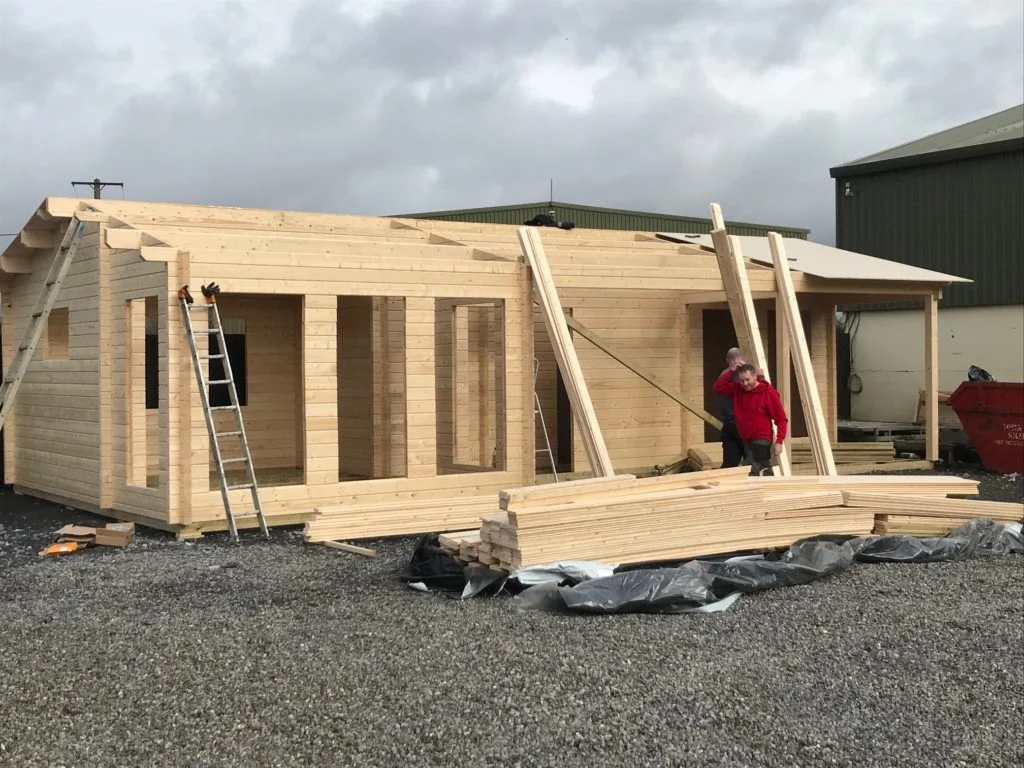
How we work at Casetas de Jardín 24: we do not pour concrete slabs or handle site groundworks. Instead, we supply comprehensive architectural plans so your local contractor can prepare the foundation, electrical conduits, and plumbing runs. Once the base is cured and ready, our team delivers and builds the kit. While we do not provide financing directly, we supply clear, itemized commercial quotes formatted for bank review. Depending on the model, our assembly team can install most of our timber houses within approximately one week.
Lenders require a clear, itemized construction budget before issuing a financing offer. Request yours today, and we will prepare a comprehensive quote covering the model, professional assembly, and insulation options.
Direct from the manufacturer, with free delivery and a 5-year warranty.
According to BBVA, if a house is erected on rustic land (suelo rústico) and cannot be registered in the Land Registry, mortgage financing is unavailable, making a personal loan the only viable option. While regional regulations vary and some exceptions exist, you should always consult both your local town planning department and your bank before buying rural land.
The Bank of Spain states that self-build mortgages typically cover up to 80% of whichever is lower: the verified construction budget or the estimated appraisal value of the completed property. The borrower must provide the remaining 20% or more from their own funds.
No, unless it meets all legal requirements of registered real property. A standard shed or garden room built without permanent foundations, building permits, or land registry documentation is classified as personal property and must be financed via personal loans or savings.