Colour completely transforms a wooden building. The same model can look like a Nordic cabin, a rustic lodge or a modern little garden house just by changing the shade of the wood stain. Going from a bright white to graphite black isn’t a subtle tweak – it’s a complete change of style.
In this guide we’ve gathered real projects of painted wooden houses and colour combinations that work, so you can find the inspiration you’re after before you pick up the brush. You’ll see examples of white, wood tones, two-colour contrasts and on-trend dark finishes.
Explore long-lasting models, made from high-density timber and designed to show off their finish for years.
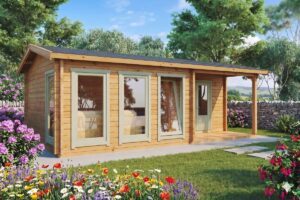


A wooden house can be painted almost any colour, but the finishes that age best are natural wood tones, white, dark neutrals like grey and graphite black, and earth tones. What matters isn’t just the colour, but applying a protective wood stain that filters UV rays.
From there, it’s all a question of style and setting. These are the colour combinations for painted wooden houses that work best, with real examples of each style.
Is white a good choice for a wooden house? Yes. It’s the most versatile and timeless colour: it brings brightness, makes a space feel bigger and works with any setting, both on exteriors and indoors.
It’s no coincidence that Pantone’s Cloud Dancer, a warm off-white, is the colour of the year for 2026, moving away from industrial greys to embrace façades that look sculpted from light.
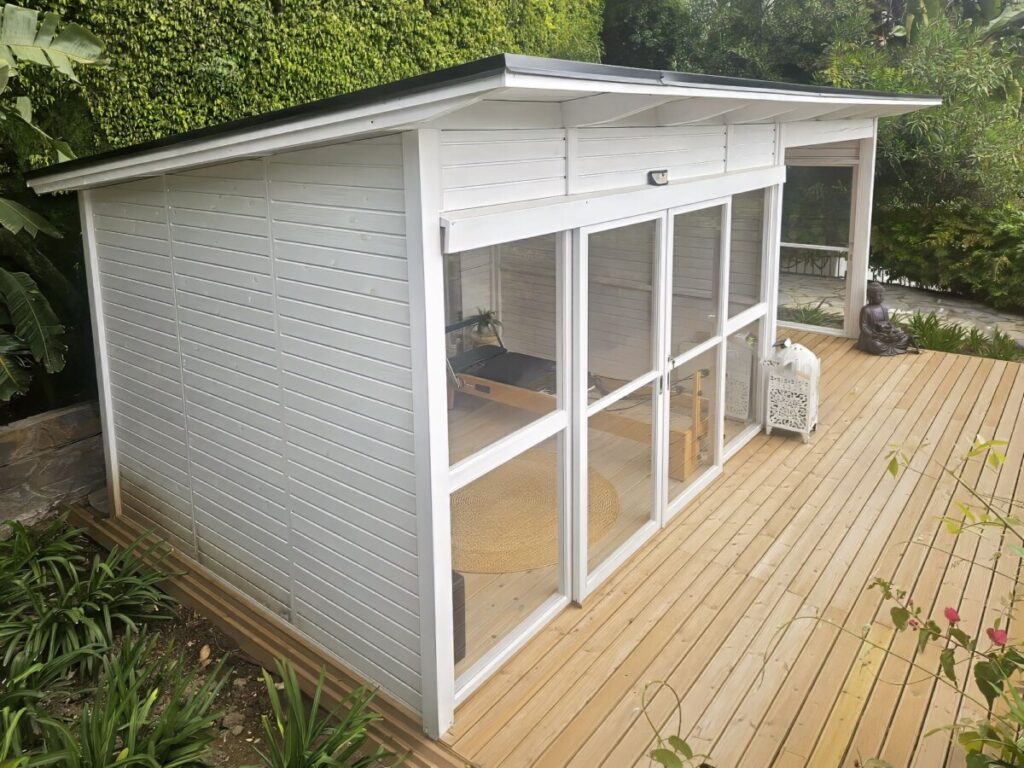
In this garden house, the white body contrasts with the dark roof and the natural wood trim. The result is bright but full of character, and it fits in perfectly surrounded by green hedging. It’s proof that white never fails.
A tip: if you use it indoors, you can paint a single wall in a bolder shade to add a pop of colour without losing the sense of space that white brings.
If you like the warmth of exposed wood, tones that mimic its natural colour are the safest bet. They blend with the grain and give an effortlessly elegant result. They work just as well on a large house as on a small garden shed.
The most commonly used are:
Because these shades mimic the real colour of wood, they blend in with it easily. The final finish looks like natural, unpainted wood, ideal for a garden shed surrounded by plants. Not all painted wooden houses aim to stand out: many prefer this natural finish to let the garden take centre stage.
Many of the prettiest painted wooden houses don’t use a single tone, but two. Playing with two colours is the simplest way to achieve a special finish, and the formula works both ways:
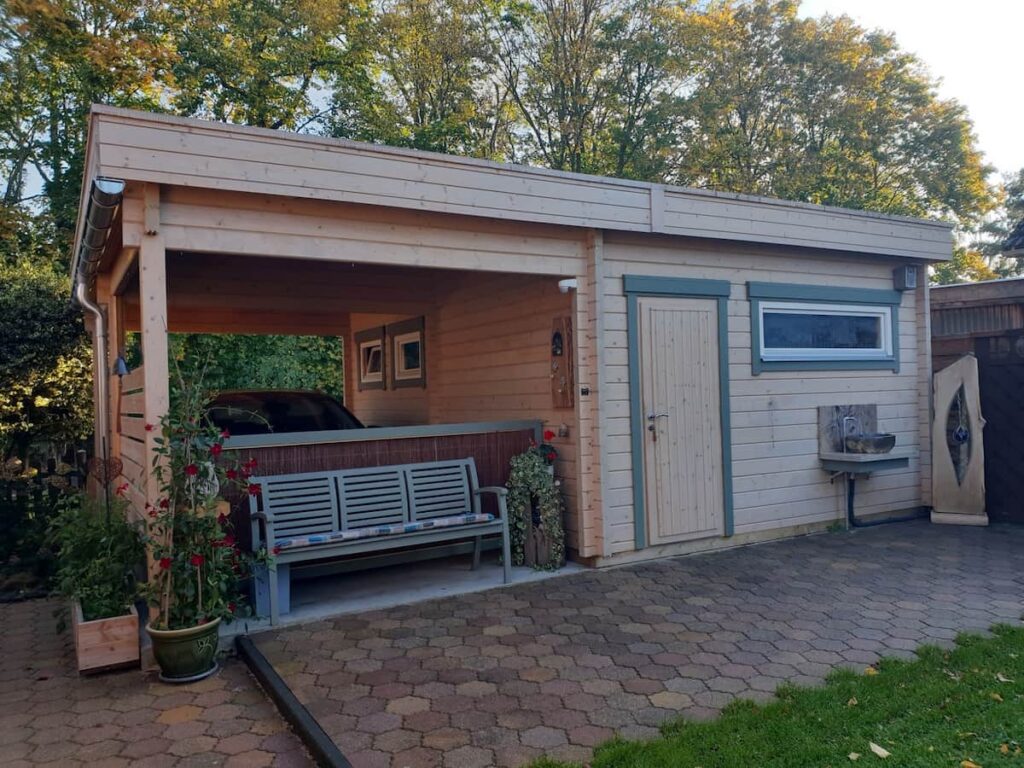
This project sums it up well: the light natural wood is paired with door and window frames in a greyish blue. It’s a low-cost change, because you only paint the joinery, but it lifts the whole look. The details usually picked out are the windows, doors and the roof trim. Garden houses with a terrace offer plenty of scope for this kind of contrast.
Dark tones are making a strong impression in exterior design. They bring a contemporary, refined feel, and they have a practical advantage: pigmented finishes tend to protect wood from UV rays better than clear ones, although very dark colours can also increase surface heat.
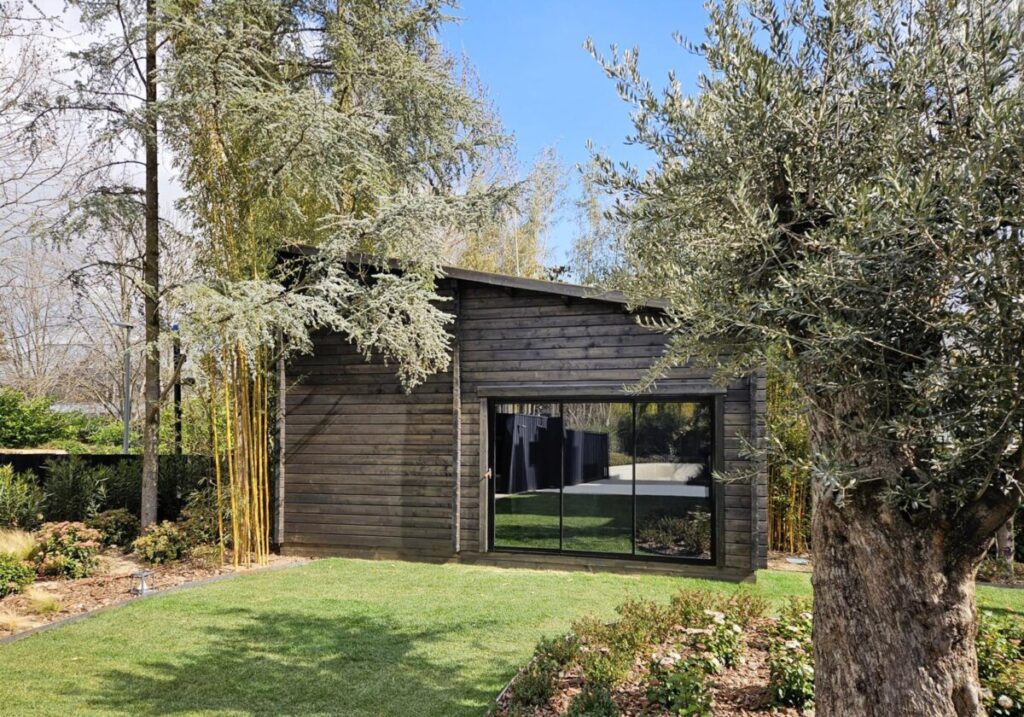
Exterior finish with Remmers HK wood stain (ebony).
This graphite-black model with a large glass frontage shows just how far the style can go. The dark tone enhances the modern architecture and contrasts with the green of the garden and the olive trees. It’s the ideal finish when you want the building to be the star, not to hide away. More and more painted wooden houses are opting for these tones for a contemporary look.
Colour can also respond to the function of the space. This dark building houses a golf simulator, but the same logic applies to any leisure room:
If your wooden house is out in the countryside, earth tones are the natural choice. Clay greens, soft terracottas, warm sands and beiges evoke woodland and earth, ideal for creating calm, timeless spaces.
These colours help the building blend into the landscape. If you’re weighing up a location like this, it’s worth knowing whether you can put a wooden house on rural land before you decide on the finish.
The approach changes depending on whether you’re painting inside or out. This table sums up the most common options:
| Finish | Feel | Ideal for |
|---|---|---|
| White | Bright and timeless | Façades, gazebos, interiors |
| Natural wood | Warm and understated | Gardens with greenery |
| Two colours | Personal and considered | Garden houses with a porch |
| Black / graphite | Modern and refined | Designer buildings, leisure rooms |
| Earth tones | Calm and rustic | Rural settings |
Indoors, lighter colours (clear or white) are best for gaining space and light. Outdoors, go for tones with more pigment, because they offer better protection from the sun, which is the biggest cause of damage to wood. This applies to all painted wooden houses, from a home to the smallest wooden sheds.
However beautiful the colour, without protection the wood will deteriorate. Before thinking about the shade, you need to apply a good protective wood preservative that repels water, filters UV rays and prevents fungi and wood-boring insects.
But the finish is only as good as the wood beneath it. Good-quality timber, with a dense, tight grain, absorbs the stain better and lasts longer, so it’s worth starting from a solid base.
On top of that we recommend our decorative wood protector, which combines colour and protection in a single product.
The best inspiration is to see the models in person and picture your own finish. Explore our range of log cabins and find the perfect base for your next project.
If the garden is more your thing, take a look at the garden houses with a terrace or the large garden cabins, which, thanks to their size, give you plenty of room to personalise with whatever colour inspires you most.
Almost any. The finishes that age best are wood tones, white, grey, graphite black and earth tones. The key is to always use a stain with a UV filter.
As a general rule it’s worth checking the finish every 3 to 5 years and applying a maintenance coat when the colour starts to fade. The frequency depends on exposure to sun and rain.
In general, yes: pigmented finishes protect against UV rays better than clear ones. Dark tones like graphite black offer good protection outdoors, although they do heat up a little more on the surface.
You can, but a quality stain with a UV filter is advisable. Light tones offer slightly less protection from the sun, so a good-quality product makes up for that difference.
Stain is usually the better option for exteriors because it lets the wood breathe, penetrates it and brings out the grain, as well as protecting it. Plastic paint creates a film that can crack and flake over time.
Sources: