Last updated: 22 June 2026
The short answer is this: yes, but not always. You can put a wooden house on rustic land, although it isn’t enough for it simply to be made of wood or to look like a lightweight structure. What really matters is how that land is classified, what the house will be used for and what the local council allows.
That is usually where the key lies, because placing an auxiliary shed to store tools is not the same as putting up a home with a bathroom, kitchen, foundations and utility connections.
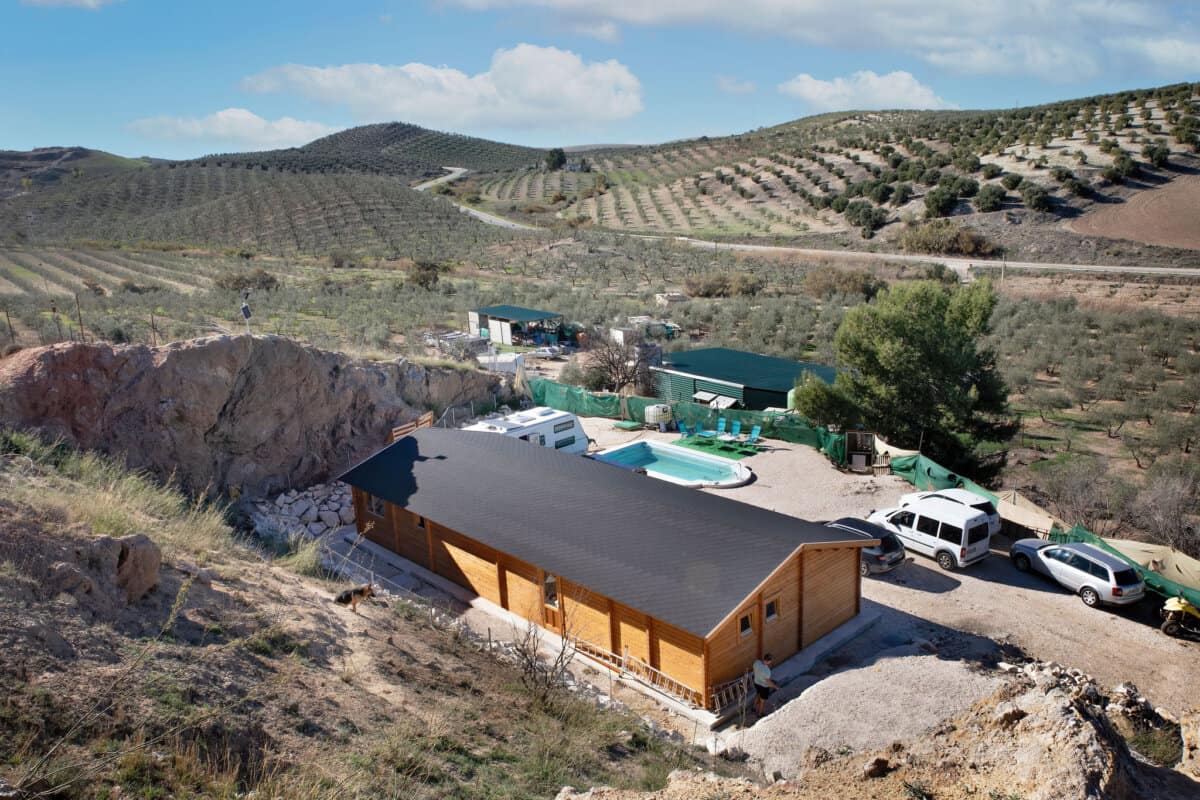
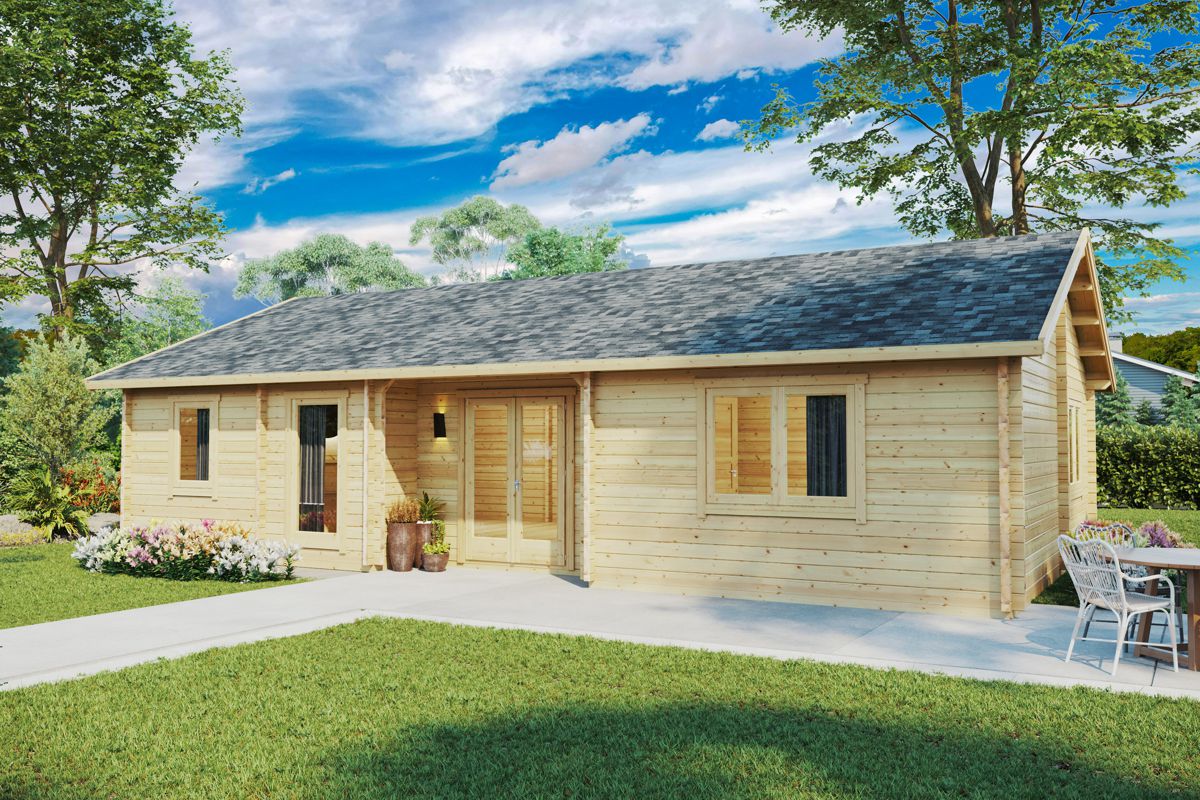
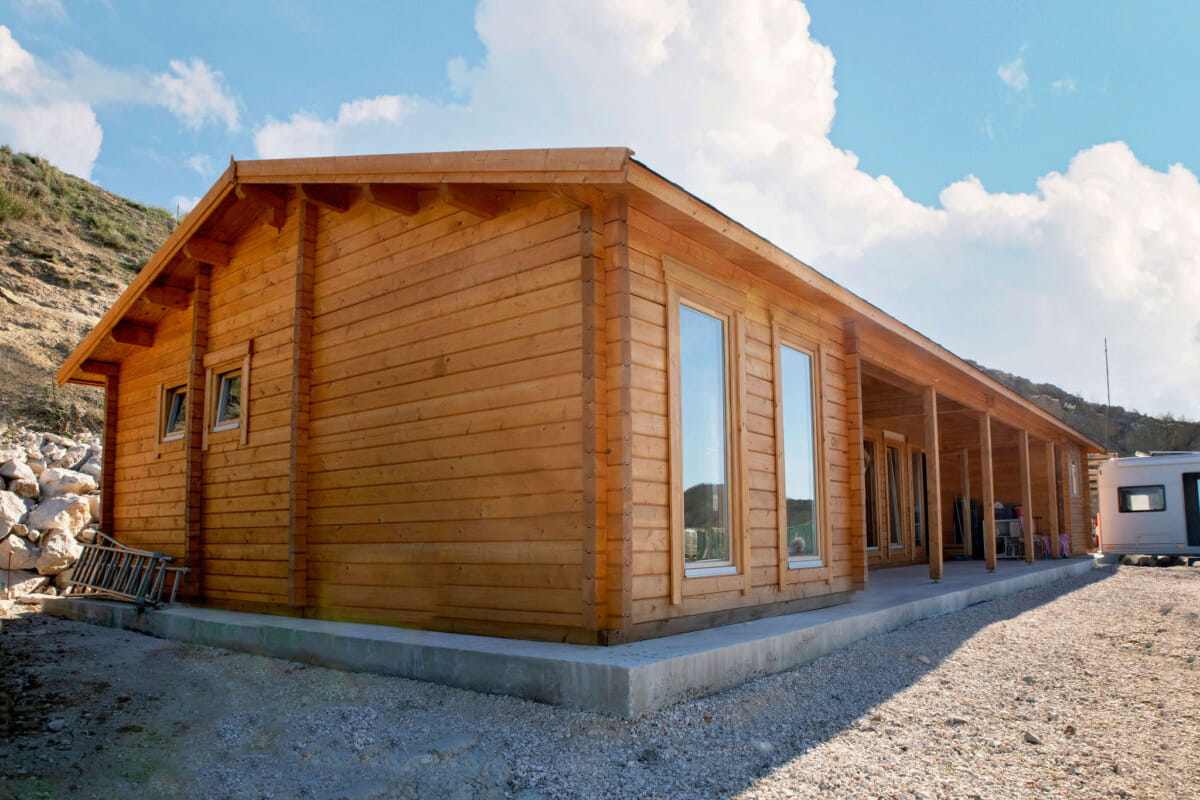
On the photo above: 100 m² wooden house with three bedrooms.
For this reason, before buying the plot or ordering the house, it is worth reviewing both the municipal and the regional rules. In some cases it will be possible to apply for a licence. In others, building will be heavily restricted or prohibited outright.
Below, we look at what you can do, which permits are usually required and what alternatives exist when the land does not allow a home as such.
Thinking about building on rustic land?
At Casetas de Jardín 24 we are specialists in customisable wooden structures for plots, gardens and outdoor spaces. We help you weigh up practical, high-quality options at direct factory prices, with no middlemen and free delivery included.
Five-year guarantee and thousands of satisfied customers across Europe.
Rustic land, also known as rural land or non-developable land, is defined as the portion of land that lies outside the boundaries of a developed or developable area.1
Its intended purpose is not usually residential or commercial use, but rather agricultural, livestock, forestry, hunting or any other use linked to the rational management of natural resources.
This does not mean that nothing can be done on it, but that the buildings permitted are far more limited than on urban land.
So if you are wondering what you can build on rustic land, the first step is to check the exact classification of the plot and consult the municipality’s town planning rules.
Rustic land in Spain is classified into several categories, such as:
Each type of rustic land has its own rules and regulations. On protected rustic land, building is severely restricted in order to preserve the environment. On common rustic land, by contrast, certain buildings are possible.
It is not enough, then, to know that a plot is rustic. It is essential to know which type of rustic land it is and what the specific town planning rules say about the use it can be put to.
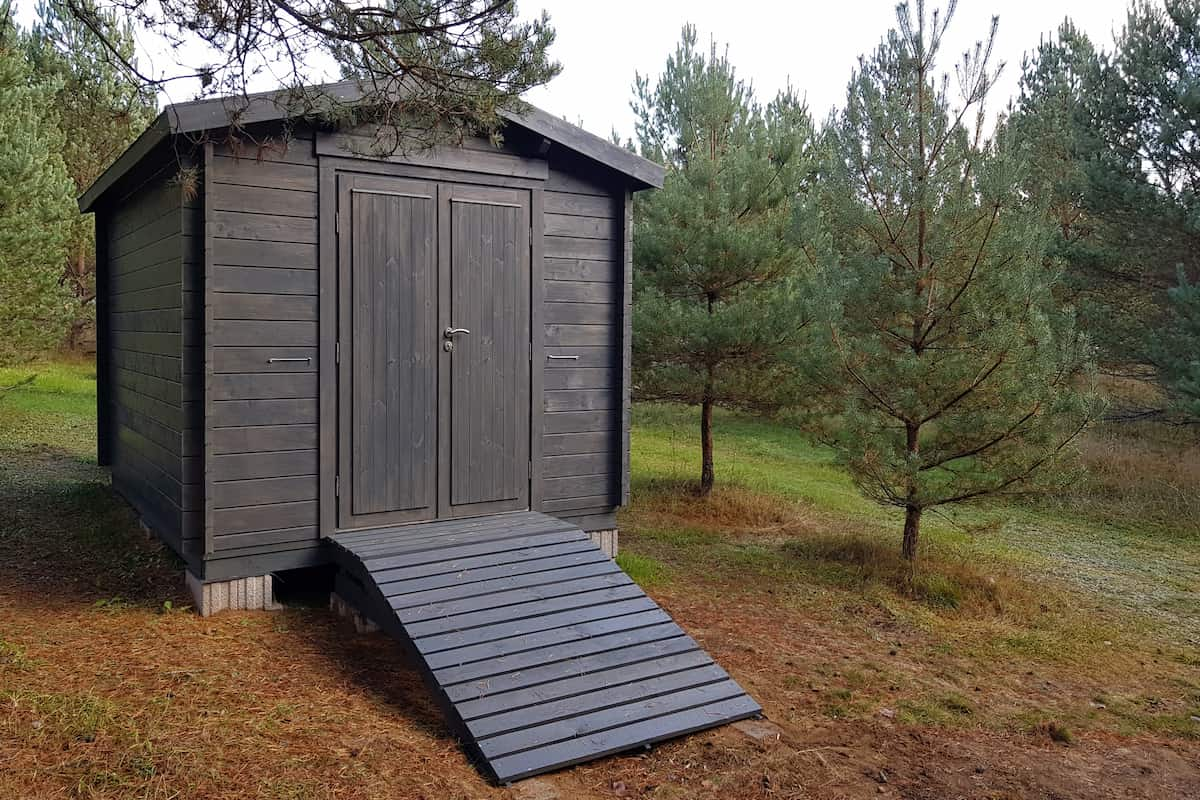
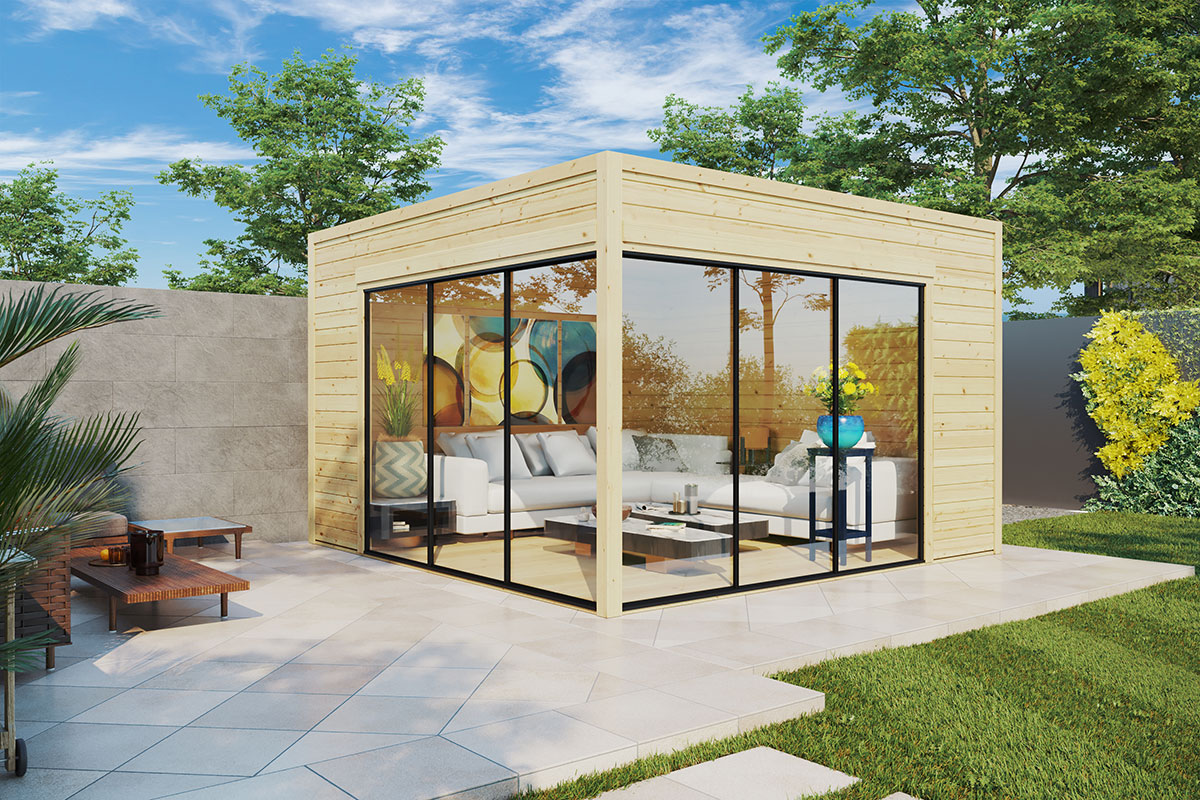
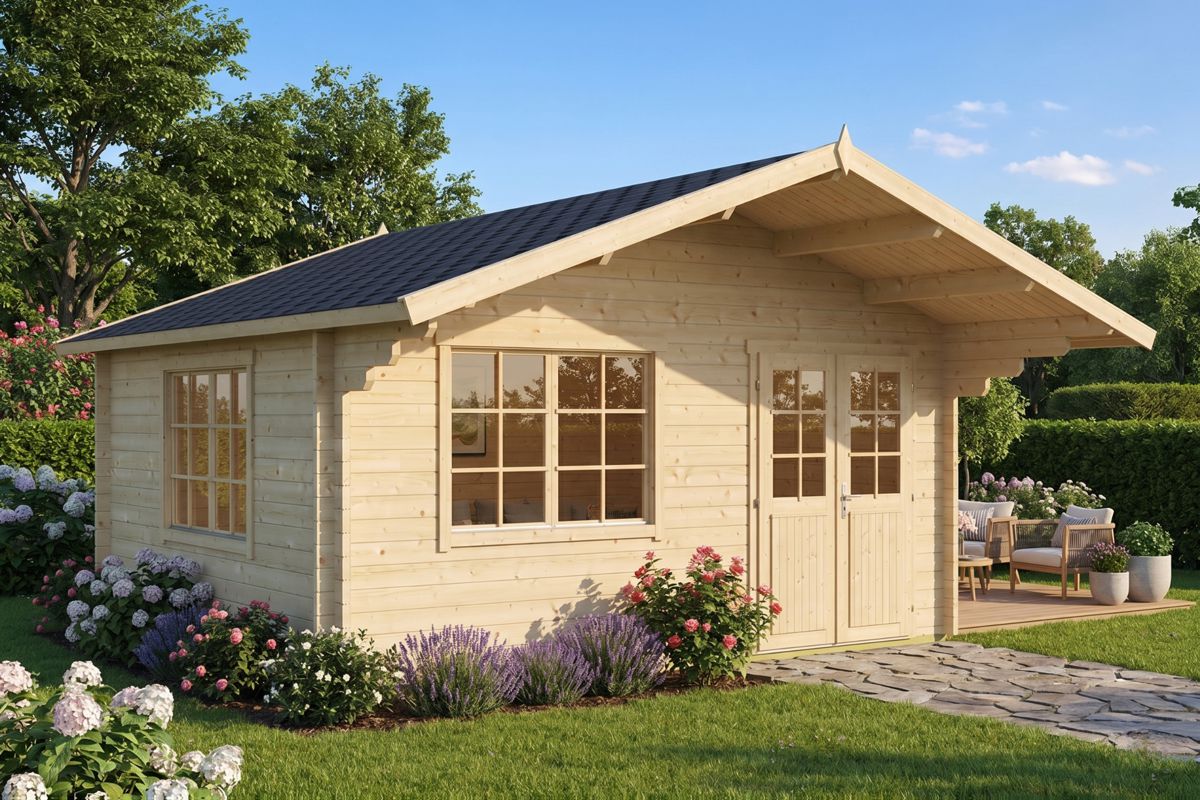
In the photo above: Garden shed “Eva”.
The question of what type of house you can put on rustic land does not have a single valid answer across all of Spain.
In general, the buildings permitted on rustic land relate to agricultural, livestock, forestry or land-management support activities.
For example:
A home on rustic land, by contrast, is usually far more restricted. However, under certain conditions and with the appropriate permits, it is perfectly possible to build wooden houses.
In some cases, councils allow homes to be built if they are linked to the agricultural use of the land.
This means that, if you can demonstrate that you need to live on the land to manage the agricultural activity, you could obtain permission to build a wooden house.
Even so, justifying that need is not enough on its own.
Requirements may also apply to:
That is why, when someone asks what can be built on rustic land, the correct answer must always involve reviewing the specific rules that apply to their plot.
Yes, in some cases you can put a prefabricated house on rustic land, but it must meet the same planning conditions as a traditional building.4
A prefabricated house is not automatically legal just because it is modular, transportable or built off-site.
If it has a residential use, a permanent character, foundations, utility connections or the internal installations typical of a home, the council can treat it as a building.
In that case, it will most likely require a licence, a technical project and planning authorisation. The difference lies not so much in whether the house is prefabricated, wooden or built on-site, but in the building’s actual use.
A wooden house on non-developable land is not exempt from the rules simply because it is built in timber.
If the house is used to live in, to sleep in regularly, or to fit a kitchen, bathroom, drainage or a stable connection to utilities, it can be considered a home.
A home on rustic land will therefore only be viable when the rules expressly allow it.
In some municipalities it may be authorised if it is linked to an agricultural or livestock activity. In other cases, it may be prohibited.
For this reason, before installing a wooden house on non-developable land, it is worth consulting the planning department and also reading our guide on the rules for installing a wooden house.
Tool sheds on rustic land are among the most common structures on agricultural plots.
Their main purpose is to store tools, light machinery, crop produce or material needed to work the land.
In many municipalities they can be authorised more easily than a home. Even so, they are not always exempt from a licence, and obtaining one may be limited by:
Although it should be obvious, a tool shed must not be turned into a home if the licence only allows agricultural use.
Fitting bedrooms, a kitchen, a full bathroom or permanent utilities can therefore lead to legal problems.
If you need a practical solution to organise tools, protect machinery or create an auxiliary space, you can browse our garden rooms category.
Yes, you can put a site cabin on your land if its use, duration and location comply with the municipal rules.
A site cabin is usually understood as a temporary installation. It can serve as support during authorised works, as a temporary store or as an auxiliary workspace.
The problem arises when it stops being temporary. If it remains indefinitely, is connected to utilities, is placed on a fixed base or is used as a home, the council may consider it a permanent structure. In that case, it could require a planning licence or even order its removal.
Before installing a site cabin on rustic land, it is worth checking:
Earth-sheltered houses on rustic land do not become permitted simply because they have a smaller (or zero) visual impact.
Although a buried home may blend better into the landscape, it is still a building.
If it is intended for residential use, it needs a licence, a technical project and compliance with the planning rules.
In addition, this type of construction may require further studies on:
On protected rustic land, any work below ground level may be especially restricted. So, before considering an earth-sheltered house on rustic land, it is advisable to consult an architect and the council.
Yes, in some cases you can build in a rural settlement, but only when the town planning rules recognise that area as a settlement, a rural nucleus or an equivalent designation.
Not all rustic land forms part of a rural settlement. Where this designation exists, the rules may allow certain residential uses, renovations or extensions under specific conditions.
Even so, this does not mean any home can be built. There may be limits on:
If the plot lies within a recognised rural settlement, the first step is to request an urban planning certificate or a municipal report.
Do you have a rustic plot and aren’t sure what you can install?
Before choosing a wooden house, it is worth knowing what your land actually allows.
At Casetas de Jardín 24 we manufacture customisable wooden structures, designed to adapt to different uses, dimensions and needs.
We work with high-quality Nordic spruce, in-house manufacturing and direct factory prices, with no middlemen.
Free delivery included and a five-year guarantee.
Beyond what is set out in the Land Act, the requirements for building a wooden house on rustic land are shaped by the specific rules of each autonomous community.
Under the Spanish Constitution, it is the autonomous communities that take on certain powers over regional planning, town planning and housing.2
As a result, we find variations in aspects such as:
For example, in Murcia, to build a single-family home the plot must be at least one hectare.
Of that area, 80% must be given over to cultivation, while the remaining 20% can be used for building, although the structure may not exceed 300 square metres.
Castilla-La Mancha is another example, with similar rules. It also permits an isolated family home on rustic land where there is no risk of forming a new settlement and no presumed intention to develop the land.
Cantabria, for its part, has passed a law authorising building on rustic land under certain restrictions, with the aim of countering depopulation. It is crucial to keep an eye on legislative changes, as they can vary considerably.
As an illustration, in Andalusia the Land Sustainability Act, known as LISTA and approved in 2021, amended the regime for certain types of work on rustic land.
However, in 2024 the Constitutional Court struck down some provisions relating to residential buildings on rustic land, on the grounds that they could compromise the environmental protection of this land.3
Despite this ruling, the practical interpretation can still raise questions. That is why any project should be checked case by case with the council and, if necessary, with specialist technical advice.
Staying informed about these regulations is essential to ensure compliance with the rules in force.
Local councils are responsible for granting the permits needed to build on rustic land. These permits can vary depending on the specific rules of each municipality.
In addition, how strictly this is controlled can depend on the technical judgement applied by the planning department or the municipal architect in charge.
Generally, the first step is to hire an architect to research the planning rules in force and advise the owner.
It is also essential to approach the relevant planning office to find out which documents are needed. As a rule, you will be required to submit:
Once the permits are requested, the council will review the documents and ask for the fees to be paid, which are calculated based on the budget and the type of project.
After obtaining the licence, the owner must follow the steps indicated to legalise the building correctly. If you need more information on plot sizes, you can also read our article on the minimum area to register a rustic plot.
Mobile homes, also known as “mobile homes”, offer an interesting alternative.
The legality of installing a mobile prefabricated house on rustic land varies according to the rules of each autonomous community and the municipal regulations.
Some areas may allow these homes to be installed if they are self-sufficient. For instance, if they are fitted with solar panels, water tanks and recycling systems, and require no building work or any permanent alteration of the land. However, this does not completely remove the risk of penalties.
Although a self-sufficient mobile home may not require a building licence in certain cases, any modification or additional construction can change the situation. For example:
All of this can mean the mobile home is considered a permanent structure. So, before installing a mobile home on rustic land, it is worth asking the council for written confirmation.
Building a wooden house on rustic land without obtaining the appropriate permits can result in severe penalties that can reach very high figures.
Doing so therefore represents a considerable financial risk for the owner. In addition, in serious cases, prison sentences can be imposed.
The Criminal Code provides for prison sentences for certain types of development, construction or building work that cannot be authorised on non-developable land, especially when they affect protected areas.5 Orders to demolish the illegal structure can also be issued.
A notable example of this is the case of Criminal Court number two in Gijón in 2012, where a demolition order was issued for a building put up without the necessary permits.
Moreover, an illegal building can reduce the value of the land and make it harder to sell in future.
It can also create problems with neighbours, the local community, utilities, registries and any future transfer of the plot.
Hence the importance of following all the legal procedures and obtaining the necessary permits to avoid these problems.
A made-to-measure structure doesn’t have to blow the budget
Every plot has its own conditions: dimensions, access, rules, orientation and use limits. That is why, at Casetas de Jardín 24, we manufacture customisable wooden houses, cabins and sheds, with premium quality included as standard and direct factory prices.
Thanks to our in-house manufacturing, we can adjust dimensions and finishes without the project becoming as expensive as a traditional bespoke build.
Thousands of satisfied customers in Europe and a five-star rating on Trustpilot.

On rustic land you can build, subject to each municipality’s rules, structures linked to agricultural, livestock, forestry or similar uses.
If you are wondering what can be built on rustic land, the most common options are tool sheds, agricultural stores, stables, sheds or authorised auxiliary facilities.
On rustic land you can put up structures related to agricultural or livestock activities, such as stores, stables or tool sheds. Homes are only permitted under specific conditions and always with the appropriate permits.
Under certain conditions and with the appropriate permits, homes such as wooden houses are allowed if they are justified by the need to manage an agricultural activity on the land.
Even so, each case depends on the type of land, the autonomous community and the municipal planning rules.
Yes, in some cases you can build a house on rustic land, but not as a general rule.
The home must be permitted by the applicable rules and normally requires a licence, a technical project and a justification of the use.
A wooden house can be put on land where the town planning rules permit that use. This can be urban land, developable land or rustic land with specific authorisation. What matters is not just the material, but the residential or auxiliary use of the structure.
If you put a prefabricated house on non-developable land without permission, you may receive a penalty, a removal order or even a demolition order. And if it is considered an illegal home, the problem can be more serious.
Yes, it is legal to live in a wooden house if the home has a licence, complies with the planning rules and meets the required technical conditions.
A wooden house is not illegal because of its material, but it must meet the same rules as any home.
A prefabricated house can be placed on land where residential use is permitted.
The most common options are urban or developable land. On rustic land, it will only be possible if the rules expressly authorise it.
Putting a mobile home on rustic land may or may not be legal depending on the use, permanence, installation and municipal rules.
If it is used as a permanent home, connected to utilities or placed on a fixed base, it can be treated as a building and require a licence.
The minimum area required to build a home on rustic land varies by autonomous community and municipality.
In some cases, a large minimum plot is required, along with access to a public road and basic utilities such as electricity, wastewater disposal and refuse collection.
The build may also be limited by a maximum occupancy percentage. Beyond these guidelines, municipalities have the flexibility to adjust the regional rules to their own circumstances.
This can result in differences in the buildable area or in the specific requirements.
Building a wooden house on rustic land is possible, but it is essential to understand the relevant rules and permits properly.
Always consult your local council and take all the regulations into account to avoid legal problems.
If you want to install an auxiliary shed, a tool shed or a structure linked to agricultural use, you may have more options than if you are looking for a permanent home.
If, on the other hand, your aim is to live in a wooden house or a prefabricated house on rustic land, you will need to confirm that this use is permitted. With the right planning and compliance with the rules, you will be able to enjoy a beautiful house in a rural setting.
To bring your project to life, we recommend taking a look at the high-quality log cabins from Casetas de Jardín 24.
In our catalogue you will find practical, attractive and customisable solutions that fit perfectly into your rustic plot.
In addition, we work with in-house manufacturing, high-quality Nordic spruce, free delivery and a five-year guarantee.
Discover how we can help you create the perfect space for you.
Sources: