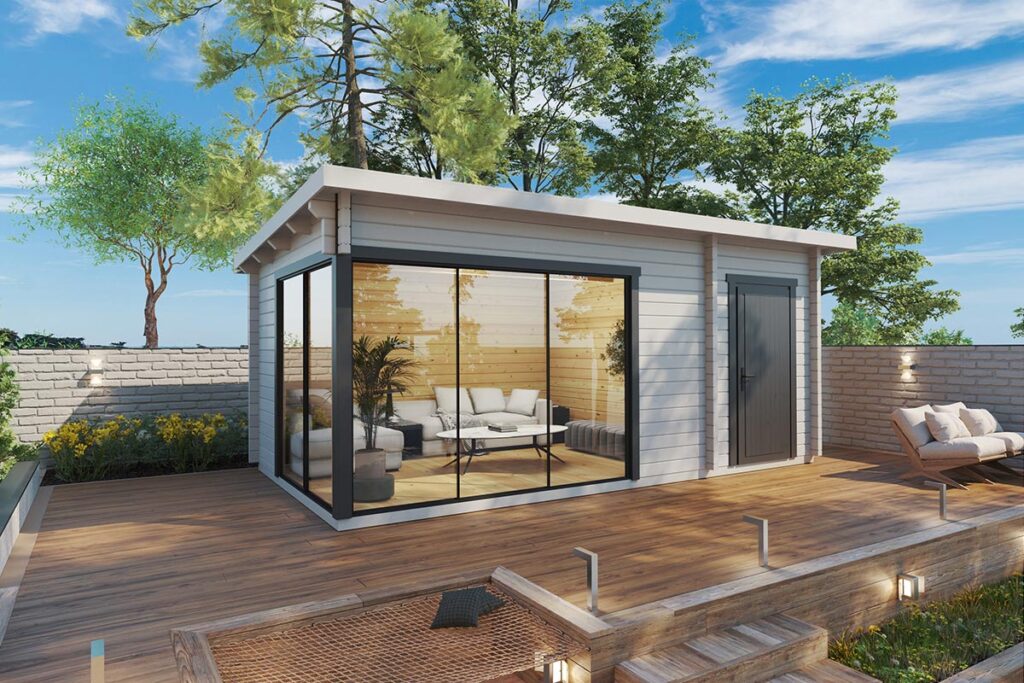
Resin garden sheds have become a very popular choice for those looking for quick and affordable solutions. However, choosing a shed doesn’t depend solely on price — it comes down to key factors like durability, insulation, maintenance, and the impact it will have on your property’s value in the medium and long term.
In Spain, where the climate can range from intense heat and humidity to rain and significant temperature swings, this choice is even more relevant. What’s more, a shed can be much more than a simple storage space — it can become an office, gym, leisure area, or even a functional extension of your home.
In this article, you’ll find a full comparison between resin and wood garden sheds, with one clear goal: to help you make the best decision based on your needs, budget, and intended use.
Table of contents
Wood sheds are a well-established option, particularly valued for their performance in varied climates and their long lifespan.
One of wood’s greatest benefits is its natural insulating ability. This means a wood shed:
By contrast, an outdoor resin shed tends to heat up quickly under the sun, especially in regions with intense summers like Andalusia, Murcia, or Valencia, creating uncomfortable interior temperatures. This factor is decisive if you want to use the shed for anything beyond basic storage.
High-quality wood sheds, such as those offered by Casetas de Jardín 24, are designed to last for decades. Their key features include:
This type of wood is denser, more stable, and more resistant, resulting in a robust structure that better withstands the test of time.
One of the most important aspects of a wood shed is its ability to offer a genuinely livable space. There are different types of wood, each with specific properties, so we recommend researching which type of wood is best for a wooden house.
A wood shed isn’t limited to storage — its insulation and stability allow for multiple uses, such as:
In the case of a gym, since body temperature rises during exercise, it’s essential to have a well-insulated environment that maintains a more stable temperature — exactly what a wood shed provides. If you’re thinking about setting up a home gym, you can find inspiration in these garden shed gym examples.
A quality wood shed doesn’t just serve a practical function — it also:
Unlike a cheap resin shed that may deteriorate within a few years, a well-maintained wood shed is a long-term investment.
Resin garden sheds have grown in popularity due to their price and ease of assembly. However, it’s essential to understand their limitations before making a decision.
One of their main attractions is low maintenance:
However, prolonged sun exposure causes progressive degradation of the material.
In areas with high solar radiation:
This reduces the shed’s lifespan, especially in the case of cheaper resin models.
Resin sheds are designed primarily for light storage:
However, they have several limitations:
Many users report issues such as doors that no longer fit properly or panels that weaken over time.
Due to their poor thermal insulation, an outdoor resin shed is not suitable for uses beyond storage. Brands like Keter are very popular for this purpose, but these sheds do not offer the habitability, insulation, and structural stability that a wood structure provides.
Although the initial price is lower, it’s important to consider:
A deteriorated or low-quality structure can also negatively affect the appearance of your property. What seems like an economical option may end up costing more over time.
| Feature | Wood Shed | Resin Shed |
|---|---|---|
| Durability | Very high (decades) | Medium (5–10 years) |
| Thermal insulation | Excellent | Low |
| Heat resistance | High | Low |
| Maintenance | Moderate | Low |
| Structural strength | High | Medium |
| Aesthetics | Premium | Basic |
| Added value | High | Low |
| Price | Higher | Lower |
| Long-term cost | Low | High |
In short, a resin garden shed may be useful in the short term, but wood offers clearly superior performance across the full range of factors.
Both wood and resin sheds need an adequate base to ensure stability and durability. A proper foundation:
For a proper installation, you can consult this guide on how to prepare the ground for a garden shed.
The right choice will depend on your situation and goals.
Choose a resin garden shed if:
Choose a wood garden shed if:
Choosing the best garden shed will always depend on your needs and how you plan to use it.
When choosing a garden shed, the quality of the materials, construction, and manufacturer experience make a significant difference in durability and performance. Sheds made from high-quality wood, such as slow-growth Nordic spruce, stand out for:
Opting for a well-built structure allows you to:
Specialist providers like Casetas de Jardín 24 offer solutions designed to last for decades, combining high-quality materials and designs built to integrate naturally into any garden.
If you’re looking for a durable solution that also adds aesthetic and functional value to your home, you can browse a wide selection of garden sheds designed to last decades.
If you have a smaller space or simply need a compact solution, you’ll also find small garden sheds, ideal for making the most of available space without compromising on quality or design.
A well-designed and properly maintained shed isn’t an expense – it’s an investment that adds long-term value.
Resin garden sheds can be a quick, affordable, and functional solution in the short term. However, if you’re looking for quality, durability, and a solution that genuinely adds value to your home, wood is clearly the better choice.
The final decision will depend on your needs, but a well-built wood shed remains the most complete, comfortable, and cost-effective option in the long run.
If you’re considering a more durable, higher-quality alternative, you can explore the garden shed models from Casetas de Jardín 24, designed to offer excellent insulation, high strength, and a long lifespan.
Yes, but mainly for basic storage and temporary use. They are not ideal for livable spaces due to their poor thermal insulation.
Yes. Under the Spanish sun, particularly in summer, they can reach very high interior temperatures, which limits their use.
A quality wood shed can last several decades. A resin shed typically has a shorter lifespan, especially in climates with high sun exposure.
Over time, it can cause fading and an aged appearance, material brittleness, cracking, and even panel warping.
Resin sheds have several structural limitations:
For these reasons, they are generally only recommended for light storage and not for more demanding or habitable uses.