More and more people in Spain are interested in log cabins as an alternative to traditional construction. Before starting the project, it is essential to understand the regulations for installing a log cabin, the necessary permits and the differences depending on the type of land.
In this guide, updated for 2026, you will find a clear and technical explanation for installing your log cabin in compliance with current legislation, with full legal certainty from the very first step.
If you are already considering specific models, you can browse the log cabin selection at Casetas de Jardín 24, with technical documentation oriented towards correct processing in accordance with current regulations.
Table of Contents
Looking for a log cabin?
Many buyers don’t know this, but much of a log cabin’s value depends on one thing: the quality of the timber.
That is why Casetas de Jardín 24 manufactures its log cabins, garden rooms, saunas and other timber structures using carefully selected Nordic spruce.
This slow-growing timber develops narrow, uniform growth rings, creating a dense, high-quality wood that looks better, feels more solid and performs better over time than faster-growing, lower-density southern timbers.
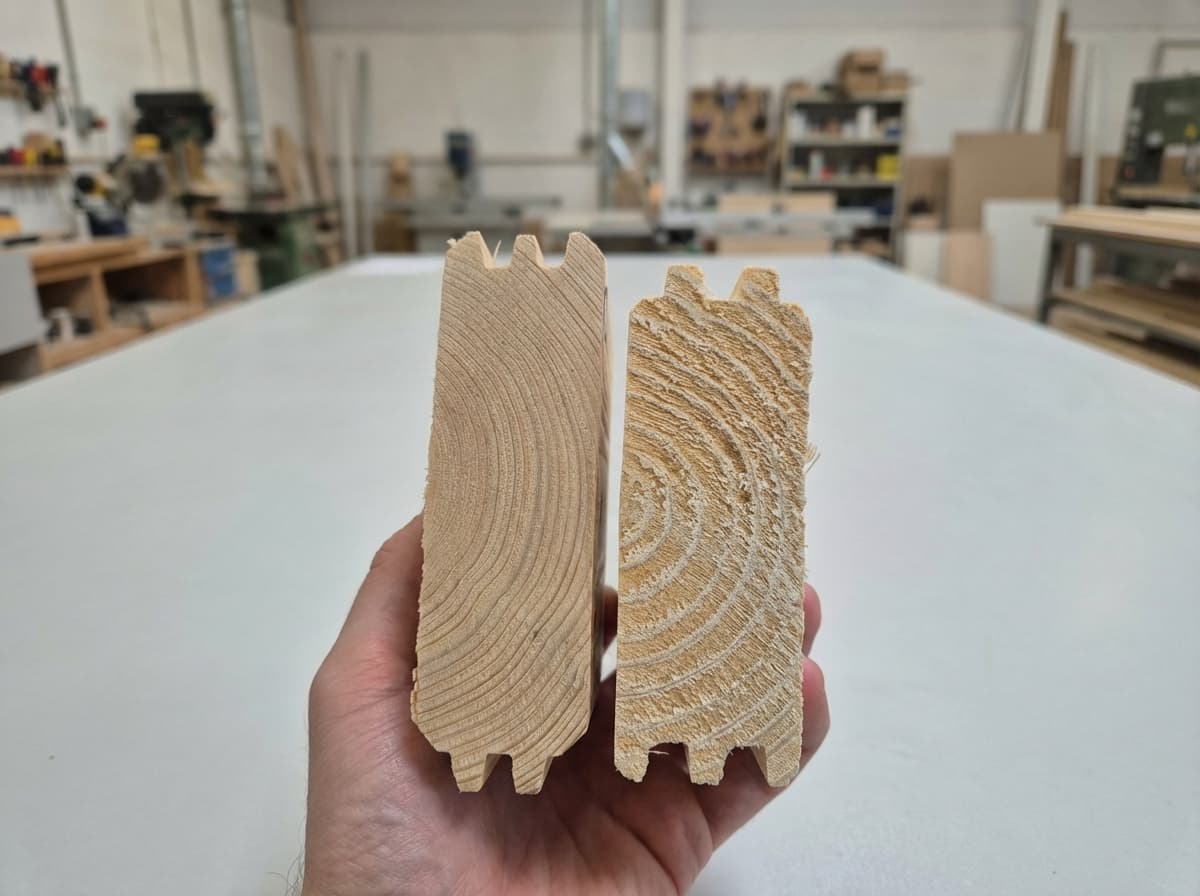
But quality at Casetas de Jardín 24 doesn’t stop at the raw material.
Every log cabin is manufactured using high-precision German machinery and finished with premium fittings, double-glazed windows with a 5-point locking system, plus many other premium details.
And because you buy directly from the manufacturer, you get excellent value for money without compromising on anything.
5-star rating · Direct from the factory · 20+ years of experience
The term “log cabin” or “wooden house” refers to several different realities:
The regulations for installing a log cabin do not depend on the cabin’s material, but on whether the structure is considered a permanent building and on its intended use.
In practice, a local authority will usually consider a structure to be immovable property when several of the following elements are present:
In that case, your project falls squarely within the Spanish Building Act (LOE) and the Technical Building Code (CTE).
If, on the other hand, the unit is transportable, without permanent anchorage and without fixed utility connections, it may be treated as movable property. Even so, many municipalities regulate its placement (due to land occupation, landscape impact, distances, health standards, etc.) and may require specific notification or authorisation.
Law 38/1999 of the Spanish Building Act (LOE) governs the construction process in Spain for permanent structures, including those for residential use.¹ It determines the parties involved – developer, designer, contractor, site director and construction supervisor – and establishes the liability and warranty regime applicable to each.
In practice, this means:
The Technical Building Code, approved by Royal Decree 314/2006, constitutes the mandatory technical framework for any new residential build in Spain, regardless of the material used.²
The regulations for installing a log cabin do not distinguish by construction system, but by use and permanent nature. However, timber presents specific technical characteristics that must be correctly addressed in the project.
In practice, there are four critical areas that deserve particular attention:
1. Structure and durability (DB-SE and DB-SE-M)
Timber structures must comply with the requirements of the Basic Document on Structural Safety, including its specific section on timber (DB-SE-M).
This involves justifying:
2. Thermal insulation and energy efficiency (DB-HE)
The Basic Document on Energy Saving sets demanding requirements in 2025-2026 regarding:
A log cabin, correctly built, can offer excellent energy performance thanks to its low thermal mass and ease of integrating continuous insulation.
3. Acoustic insulation and health (DB-HR and DB-HS)
The CTE requires minimum levels of acoustic insulation between rooms and from outside, as well as:
In lightweight systems such as timber, the design of layers, seals and junctions is decisive for meeting these requirements.
4. Fire protection (DB-SI)
The DB-SI requires:
In the case of structural timber, resistance is achieved through calculated oversizing (controlled charring rate) or through specific construction solutions.
Fire-retardant treatments can complement the design but cannot replace the technical justification.
If your aim is to add space without the complexity of a full technical project, there are some structures that, in certain cases, can be built without an architect and through simplified procedures, such as a prior notification or a minor works licence. These include shelters, small storerooms or pergolas, among other ancillary structures.
For this to be possible, certain conditions must be met: the structure must be small in footprint, single-storey, with no bathroom or kitchen, no full utility connections and no complex foundation. It must also always respect boundary setbacks, plot coverage and other local planning regulations.
As for size, there is no single limit across Spain. For example, in regions such as Madrid, Catalonia or the Valencia Community, small ancillary structures of around 10 to 15 m² are typically processed as minor works or via a responsible declaration, provided they have no habitable use.
One key point is utility connections. Adding basic electricity does not always require complex processing, but it can be subject to oversight. However, incorporating water or sanitation, or using the space continuously as a room, may lead the local authority to classify it as a structure with greater requirements.
Nor should it be assumed that a prefabricated structure, or one without a traditional foundation, needs no permits. Even if it is demountable or rests on a light base, if installed in a stable manner it may still be subject to planning regulations.
In these cases, the usual procedure is a prior notification, responsible declaration or minor works licence, with basic documentation (description, plan and fee payment). However, these types of structures cannot legally be used as a dwelling, nor registered as one, nor used to access mortgage financing as real estate.
In summary, it is possible to build without an architect, but only for ancillary and minor-scale uses. If the objective is a home, there are no shortcuts: the full technical and legal process must be followed.
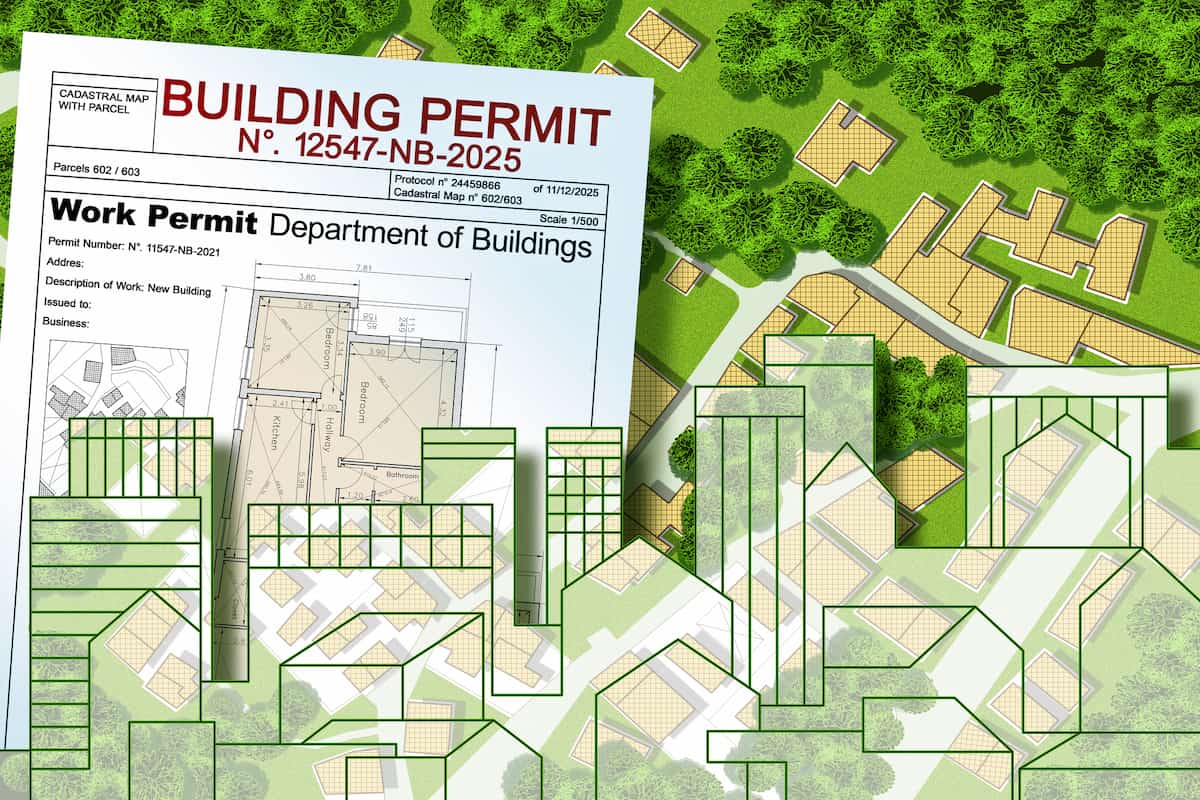
In Spain, the key filter is not whether the house is made of timber, but where you intend to install it. For residential use, the general rule is:
Before purchasing a plot (or before confirming the order), check:
Ask the local authority (or your technical advisor) for a planning data sheet or planning report. This review, done in time, saves months and avoids non-viable projects.
On urban or developable land, the installation of a log cabin as a dwelling complies with regulations provided the criteria set by local planning are respected. This includes:
In this way, the log cabin is legally considered a conventional dwelling, with no difference based on the construction material. This facilitates the obtaining of licences and certificates and makes the installation process more straightforward.
On rural or non-developable land, the regulations for installing a log cabin are more restrictive:
Some people attempt to install a mobile home on rural land in order to avoid licences. You should be aware:
If your objective is a home, the prudent approach is to plan it as a home: project, licence and CTE compliance.
| Aspect | Urban / Developable Land | Rural Land (non-developable) |
|---|---|---|
| Viability for residential use | Fully viable if local planning regulations are met | Very limited; only exceptional cases |
| Required permits | Major works licence and compliance with local planning | Generally not permitted; severe restrictions |
| Access to basic services | Must exist or be capable of provision (water, electricity, sewage) | Rarely available; generally linked to agricultural or forestry uses |
| Minimum plot size | No additional requirements generally | Some regions require large plots (e.g. 1 ha or more) |
| Permitted use | Primary or secondary residence | Agricultural, livestock or forestry uses; not habitual dwelling |
Looking for a log cabin that fits your plot?
Discover high-quality models built with Nordic spruce and buy direct from the manufacturer for the best value for money.
5-star Trutpilot rating · Direct from the factory · 20+ years experience
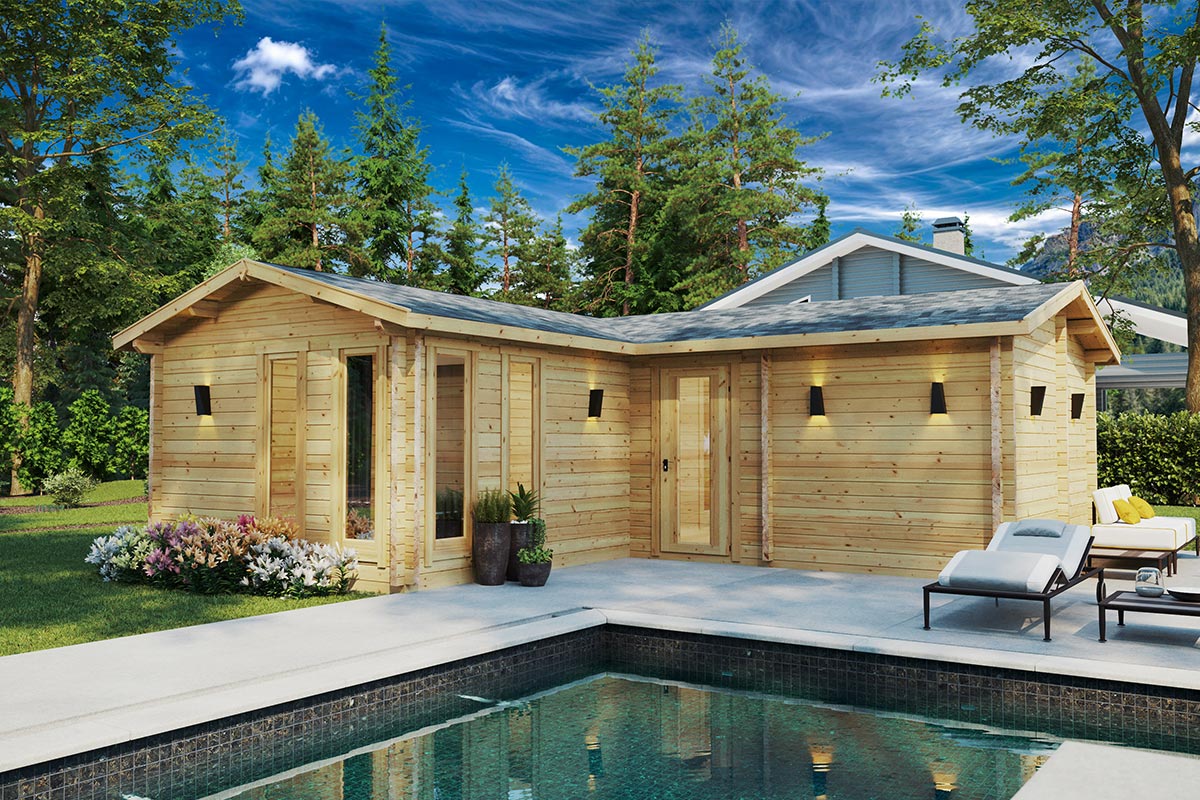
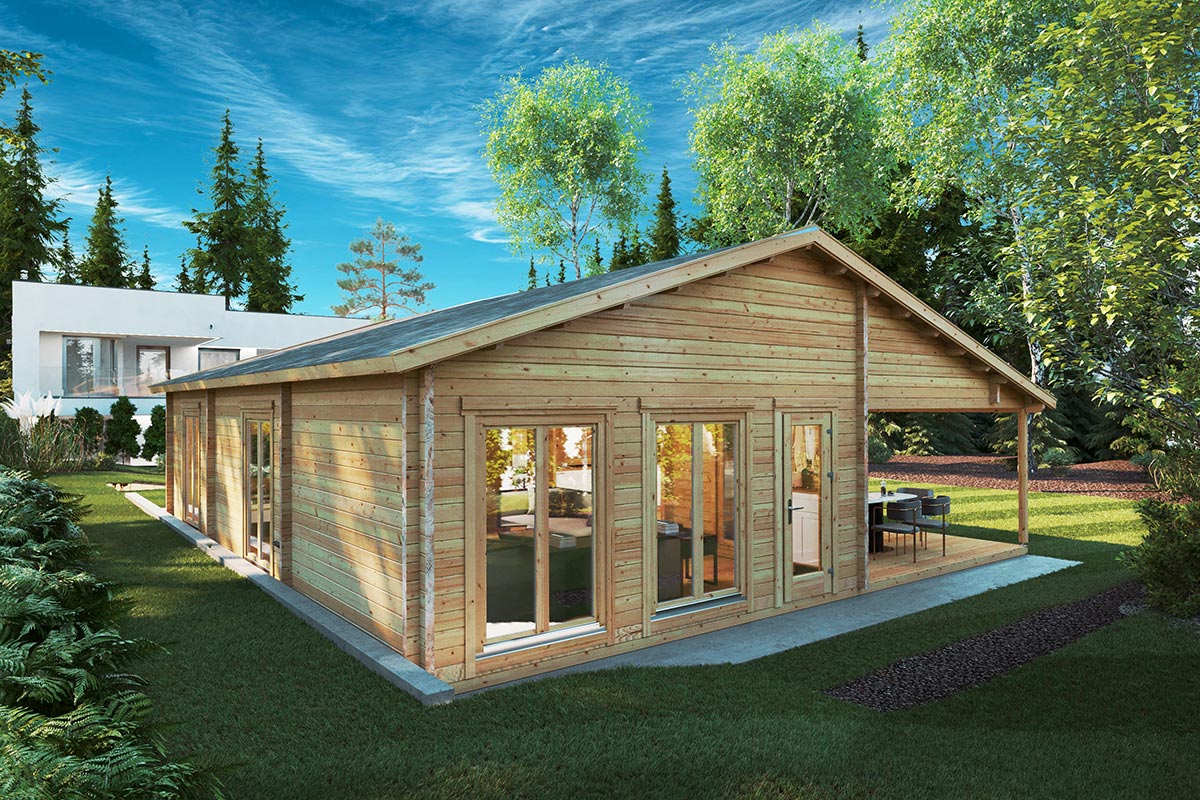
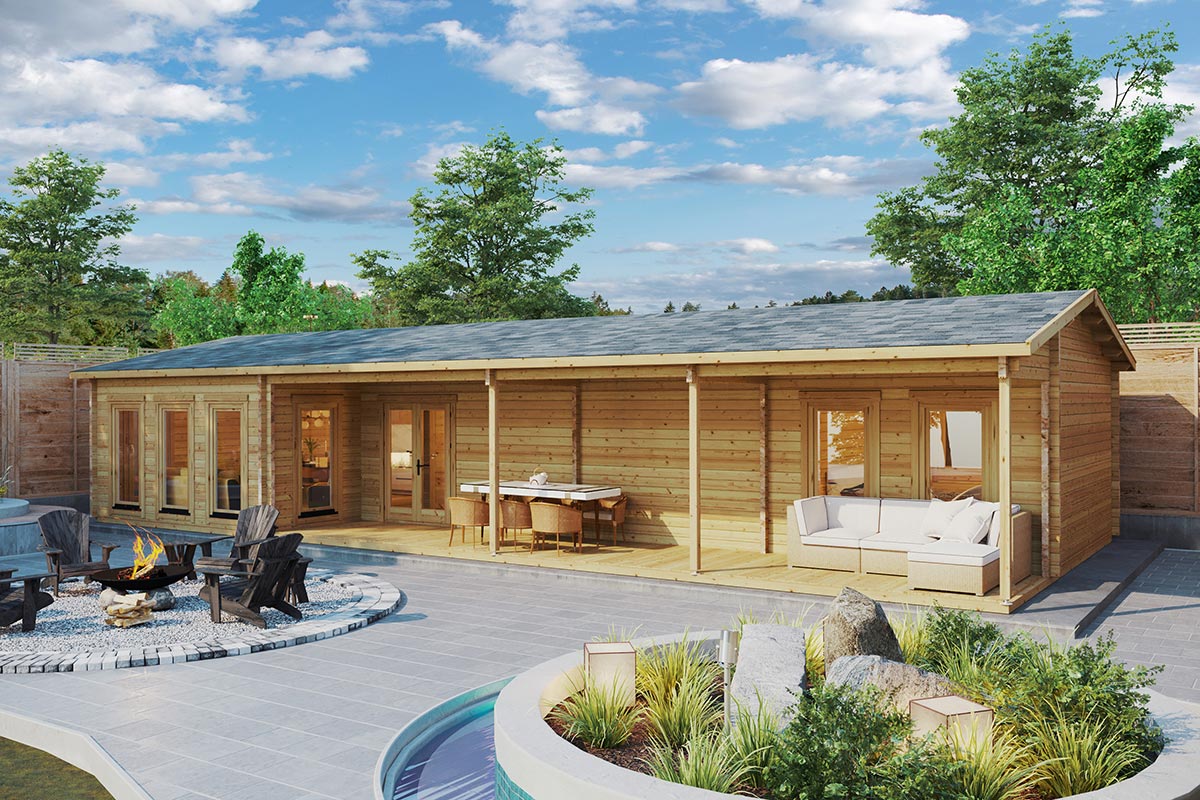
One of the points that raises the most questions is exactly which permits are needed to install a log cabin.
For a permanent wooden home, the typical requirement is a major works licence, because:
Typical documentation (may vary by municipality):
For residential use, the following professionals are normally involved:
The project must justify (among other things):
A house may be physically complete yet not legally “ready to occupy”. Generally, in order to inhabit it and take out certain utility contracts, the following are required:
This step is key if you intend to sell, insure or obtain a mortgage on the property in the normal way.
Without giving fixed figures (as these vary by municipality and project), bear in mind:
Also include the typical “non-municipal” costs: project fees, site supervision, geotechnical survey, topographic survey if required, etc.
A reasonable timeline (variable by municipality and complexity):
Practical tip to avoid delays: before submitting the licence application, carry out a prior consultation with the municipal technical officer or request a planning report if the municipality offers this.
In addition to the national framework established by the LOE and CTE, each autonomous community develops its own land regulations and sets specific conditions that local authorities then incorporate into their general plans and bylaws. As a result, requirements can vary significantly depending on the location of the plot.
Among the parameters that vary most by territory are:
Some regions set very specific requirements to allow a detached dwelling on rural land.
For example:
These examples show that viability does not depend solely on whether the land is rural, but on its specific category and the applicable regional regulations.
Some structures may qualify for a simplified regime when:
However:
They are suitable for garden sheds or ancillary offices, not as a primary residence.
Installing a log cabin without the appropriate licence or on non-developable land can have serious consequences, such as:
In certain circumstances – particularly on protected rural land – infringements can even lead to enforcement proceedings with criminal implications.
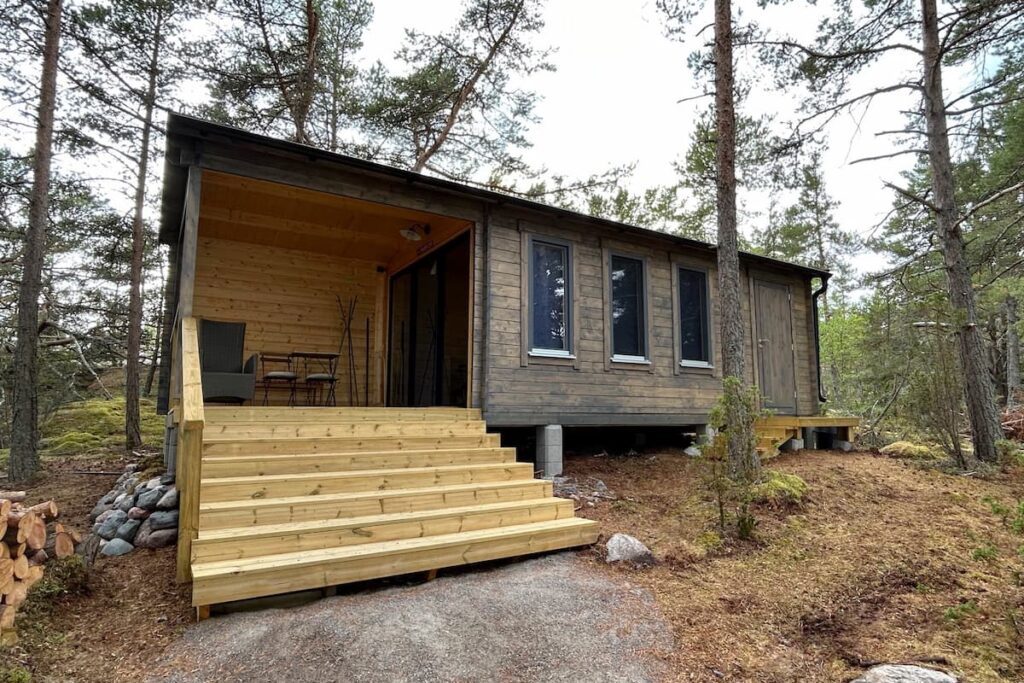
Casetas de Jardín 24 offers factory-built models with clear documentation, support and experience to help you coordinate the process with your architect and local authority.
No, if it is a permanent dwelling (immovable property). The LOE and standard municipal practice require a project and technical supervision for residential use.
When a works licence exists (where required), the build has been carried out in accordance with the project, and the first occupation licence or equivalent document has been obtained (depending on the region).
It depends on the region and municipality. It may be permitted only in specific circumstances (for example, linked to an agricultural holding, permitted buildings, coverage limits).
Not necessarily. Even if it is classed as movable property, many local authorities require oversight on grounds of land occupation, impact, residential use or utility connections. Furthermore, if the installation is permanent, they may treat it as a concealed building.
Yes, it has specific requirements: structural calculation (DB-SE-M), fire protection (DB-SI), moisture control (DB-HS) and envelope solutions for energy performance (DB-HE).
It varies by municipality and construction budget (PEM). Include ICIO + fees + professional fees + surveys (geotechnical, topographic if required). Your technical adviser can estimate this at the outline design stage.
Yes, if it is configured as legal immovable property (licence, end-of-works certificate, first occupation licence and, normally, Land Registry registration). If it remains “movable property”, it is usually not mortgageable as a conventional dwelling.
The regulations for installing a log cabin in Spain require compliance with the same legal and technical requirements as any permanent dwelling. The LOE and CTE establish the national framework, while regional and municipal planning determines specific viability.
Log cabins and timber houses are not a simplified system, but a construction solution that requires a complete project and full technical justification.
With adequate information, qualified technical advice and an correct sequence – land → project → licence → construction → first occupation – your installation can proceed with full legal certainty.
If you are ready to take the next step, explore the log cabin models at Casetas de Jardín 24 and plan your project with solid technical and regulatory backing.